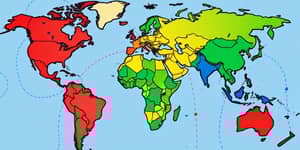
In an interconnected world, education has become a powerful export commodity, reshaping economies and societies. Nations and institutions are forging new pathways to share expertise, credentials, and innovative practices across borders.
With the global education market approaching US$10 trillion by 2030, stakeholders must understand both the scale and the nuances of this rapidly evolving sector to tap into its full potential.
The Global Education Market: Size and Growth
The international education sector is experiencing unprecedented structural growth and demand. By 2030, governments and private entities will fund nearly 6–7% of global GDP on education, reflecting its strategic importance.
Key segments drive this expansion, each with distinct dynamics and growth rates. Understanding these figures provides context for where export opportunities lie.
Asia-Pacific leads in educational services revenue, followed by Western Europe and North America. Yet the fastest enrolment growth is unfolding in developing regions, underscoring vast untapped markets.
Defining Educational Export in the 21st Century
“Educational export” goes beyond student mobility. It encompasses the cross-border provision of learning through technology, curricula, and services, forging robust demand for international credentials worldwide.
- International student mobility (higher education, schools, TVET)
- Branch campuses and transnational education partnerships
- Online and blended cross-border programs and MOOCs
- Exported curricula, assessment systems, and teacher training
- Edtech platforms, digital learning tools, and corporate training services
Framing educational export as part of dynamic enrolment growth and innovation reveals its strategic role in global value chains, akin to trade in goods or services.
Key Market Segments Driving Export Opportunities
Four segments stand out for their export potential. Each presents unique entry points, challenges, and rewards:
- Early Childhood Education: High growth driven by awareness of lifelong impacts and government subsidies.
- K-12 International Schools: Fee income surpassed US$69 billion in 2025, with rising demand in emerging regions.
- Higher Education: Forecasted to exceed US$2.5 trillion by 2034, powered by online degrees and alternative credentials.
- Workforce Training: Corporate and government upskilling programs growing at 6.5% CAGR to 2030.
Mapping these segments against regional needs allows providers to tailor strategies and partnerships effectively.
Opportunity Domains: Pathways to Expansion
Within these segments, four domains offer high-impact export channels, from mobility to digital services.
International Student Mobility & Transnational Education
Before the pandemic, 5–6 million students studied abroad annually. As numbers rebound, institutions are diversifying outbound and inbound flows through near-shore mobility and collaboration.
Major exporters—such as the U.S., UK, Australia, and Canada—are joined by emerging hubs like China, Germany, and the Netherlands. Transnational education (TNE) models, including branch campuses and joint programs, allow institutions to navigate visa constraints while expanding footprints.
Risks include policy shifts and economic volatility, but the deep cultural exchange and enrichment driven by mobility remains a cornerstone of global education.
Edtech and Online Cross-Border Learning
Advances in broadband access and AI-integrated platforms have revolutionized remote learning. Providers can now export pedagogy without physical campuses, reaching learners in remote or underserved areas.
Key trends include microlearning modules, digital badges, and alternative credentials that fit into flexible, modular programs. Governments and corporations worldwide are procuring these solutions to address skills gaps and regulatory requirements.
The transformative power of global education becomes tangible as MOOCs and online degrees attract diverse cohorts, reducing cost barriers and visa dependency.
Workforce Training & Lifelong Learning
As industries confront rapid digital transformation, the demand for upskilling and reskilling is skyrocketing. Corporate clients seek comprehensive training solutions that blend technical, leadership, and compliance modules.
Professional certifications in project management, cybersecurity, and accounting are moving across borders, supported by global professional bodies and accreditation frameworks.
Collaboration between educational institutions and industry players fosters innovative digital learning platforms and tools, ensuring relevance and enhancing employability outcomes.
Early Childhood Education & System Building
Though smaller in absolute size, ECE’s ~7% CAGR reflects its critical role in lifelong learning journeys. Governments and private operators are investing heavily in curricula, teacher training, and infrastructure.
Export opportunities include licensing curricula, training educators, and establishing joint ventures for new preschool networks. These efforts contribute to strategic partnerships and local investments that strengthen national education systems.
In emerging markets, the middle class’s aspirations for international-quality early education present a potent growth frontier.
Strategic Considerations for Success
To harness these opportunities, providers should consider:
- Conducting detailed market analysis to tailor offerings to local needs and regulations.
- Forming partnerships with governments, NGOs, and local investors to navigate cultural and policy landscapes.
- Leveraging technology to scale quickly and maintain quality across diverse contexts.
- Investing in cultural competency and support services to enhance learner experiences abroad.
By embracing these strategies, institutions can build sustainable export models that deliver both impact and growth.
Conclusion
Educational export represents a once-in-a-generation opportunity to expand global influence, generate revenue, and foster cross-cultural understanding. As the world becomes more interconnected, the flow of knowledge will shape economic and social development in profound ways.
Stakeholders who act with vision, agility, and collaboration will lead the next wave of innovation, ensuring that quality learning transcends borders and transforms lives everywhere.
References
- https://www.qs.com/insights/2025-global-education-outlook
- https://iscresearch.com/news-5-emerging-markets/
- https://www.researchandmarkets.com/reports/5781182/educational-services-global-market-report
- https://www.precedenceresearch.com/higher-education-market
- https://www.holoniq.com/notes/the-size-shape-of-the-global-education-market
- https://www.thebusinessresearchcompany.com/report/educational-services-global-market-report
- https://www.statista.com/outlook/amo/app/education/worldwide
- https://www.oecd.org/en/publications/2025/09/education-at-a-glance-2025_c58fc9ae.html