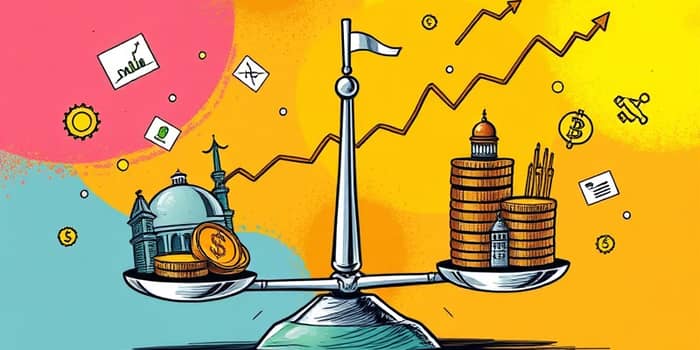
Fiscal policy represents the strategic decisions governments make through taxation, spending, and borrowing to steer economic performance. As one of the main tools alongside monetary policy, it aims to achieve price stability, full employment, and growth by adjusting the levels of government revenue and expenditure.
The mechanisms driving fiscal policy can profoundly influence everything from business investment to household consumption. Understanding its components helps clarify how public decisions affect real-world outcomes, molding markets and livelihoods alike.
Understanding Fiscal Policy
At its core, fiscal policy refers to government interventions in the economy via budgetary measures. Through changes in tax rates, public spending programs, and debt issuance, policymakers manipulate aggregate demand and supply to hit macroeconomic targets.
Whether responding to a recession or braking an overheated market, decision-makers weigh the timing, scale, and composition of fiscal actions. Properly timed interventions can smooth out business cycles, while missteps may exacerbate volatility or inflationary pressures.
Main Components and Economic Levers
The main levers of fiscal policy encompass revenue, expenditure, and financing choices that determine public sector influence on economic activity:
- Taxation: Adjusting tax rates on income, consumption, or corporate profits affects disposable income and private investment decisions.
- Government Spending: Expenditures on infrastructure, education, healthcare, and defense directly inject demand into the economy.
- Transfers: Direct payments like social security, unemployment benefits, and subsidies can quickly modify purchasing power.
- Borrowing: Issuing or redeeming debt allows governments to manage deficits, fund emergencies, or recycle savings during boom years.
Types of Fiscal Policy
Fiscal policy typically falls into three broad categories, each activated depending on economic conditions:
Goals and Objectives
The overarching aims of fiscal policy include sustaining economic growth, smoothing business cycles, and ensuring equitable outcomes. Governments leverage fiscal tools to:
• Promote sustainable output by smoothing peaks and troughs. • Maintain high levels of employment and reduce joblessness. • Redistribute income via progressive taxation and targeted welfare. • Address public goods and correct market failures when private markets fall short.
How Fiscal Policy Works
Fiscal actions primarily operate through their influence on aggregate demand, a key GDP component. When the government increases purchases (G), it directly raises production and employment. Conversely, tax cuts alter disposable income, prompting households and firms to adjust consumption and investment behaviors.
Crucially, the multiplier effect in action means that each dollar of net fiscal stimulus can generate more than one dollar in economic activity. This phenomenon stems from successive rounds of spending, as initial recipients of government funds re-spend the money into the broader economy.
Interaction with Monetary Policy
Monetary and fiscal policy represent the twin pillars of macroeconomic management. While fiscal policy manipulates budgetary levers, monetary authorities adjust interest rates and the money supply.
Coordination often yields superior results: during deep downturns, expansive fiscal stimulus paired with low borrowing costs can revive demand efficiently. Conversely, mismatched approaches—such as loose fiscal policy amid tight monetary conditions—may neutralize intended effects.
Automatic Stabilizers vs. Discretionary Measures
Certain fiscal mechanisms engage automatically as economic conditions change. These automatic fiscal stabilizers at work include progressive tax systems and unemployment insurance, which expand government support when incomes fall and recede when recovery begins.
By contrast, discretionary policy measures by governments require legislative action, such as passing new stimulus packages, targeted tax rebates, or infrastructure bills. Although potentially more potent, these measures face implementation delays and political negotiation hurdles.
Effectiveness and Limitations
While fiscal policy offers powerful tools, it carries inherent constraints and drawbacks:
- Time lags in decision making and execution can reduce prompt impact.
- Increased borrowing may trigger the potential crowding out effect on private investment.
- Some economists argue a Ricardian Equivalence hypothesis concept where households save tax cuts in anticipation of future tax hikes.
- Stimulus applied near full capacity risks exacerbating price pressures rather than boosting real output.
Historical Examples and Recent Trends
Historical episodes illustrate fiscal policy’s transformative power. During the 2008 global financial crisis, the United States enacted an $800 billion stimulus package focused on infrastructure and tax relief, aiming to arrest the freefall in demand.
In 2020, the COVID-19 pandemic prompted unprecedented action. The U.S. CARES Act totaled approximately $2.2 trillion, cushioning households, small businesses, and healthcare systems against an abrupt economic shutdown. Government deficits spiked to over 15% of GDP that year, underscoring the scale of intervention.
Recent discourse emphasizes sustainable public investment in green technologies, digital infrastructure, and social programs, reflecting a shift toward long-term growth objectives alongside cyclical stabilization.
International Context and Institutions
Fiscal approaches vary widely across nations. Advanced economies boast extensive automatic stabilizers and robust public finances, while many emerging markets rely on more discretionary measures due to narrower tax bases.
Institutions like the IMF and World Bank advise on policy design, recommending consolidation when debt levels threaten stability and suggesting stimulus when growth lags. However, the optimal balance hinges on country-specific factors such as institutional capacity, market openness, and demographic trends.
Key Terms and Definitions
- Budget Deficit/Surplus: The gap between government spending and revenue in a fiscal period.
- Public Debt: Accumulated government borrowing owed to creditors.
- Aggregate Demand: Total demand for goods and services within an economy.
- Multiplier Effect: The amplified impact on GDP from an initial fiscal stimulus.
- Automatic Stabilizers: Built-in fiscal tools that counteract economic swings without new legislation.
By mastering the principles, levers, and limitations of fiscal policy, citizens and policymakers alike can engage more effectively in debates about taxation, public investment, and economic resilience. Recognizing the power and pitfalls of government budgets ensures informed decisions that shape the prosperity of nations.
References
- https://www.poems.com.sg/glossary/financial-terms/fiscal-policy/
- https://fa.wellsfargoadvisors.com/clements-mcgovern-financial-consulting-group/Monetaryandfiscalpolicy.htm
- https://fiveable.me/key-terms/principles-macroeconomics/fiscal-policy
- https://www.imf.org/en/publications/fandd/issues/series/back-to-basics/fiscal-policy
- https://www.reviewecon.com/fiscal-tools
- https://socialsci.libretexts.org/Bookshelves/Economics/Introductory_Comprehensive_Economics/Economics_(Boundless)/26:__Fiscal_Policy/26.01:_Introduction_to_Fiscal_Policy
- https://www.khanacademy.org/economics-finance-domain/ap-macroeconomics/national-income-and-price-determinations/fiscal-policy-ap/a/lesson-summary-fiscal-policy
- https://www.congress.gov/crs-product/IF11253
- https://www.brookings.edu/articles/how-does-fiscal-policy-affect-the-level-of-gdp/
- https://www.youtube.com/watch?v=DAF81UKWCOI
- https://americandeposits.com/insights/monetary-fiscal-policy-impact-banking/
- https://www.econlib.org/library/Enc/FiscalPolicy.html