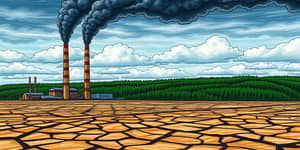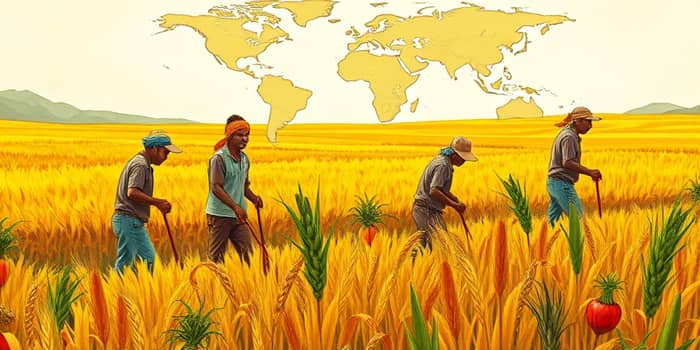
In an interconnected world of unprecedented wealth and innovation, the persistence of hunger remains a stark reminder of global inequality. Food security—access to sufficient, safe, and nutritious food to maintain a healthy and active life—is not merely a moral obligation, but a cornerstone of economic stability. As we assess the statistics for 2024 and beyond, it becomes clear that addressing hunger is essential not only for human dignity, but also for sustainable growth, social cohesion, and global prosperity.
The Scale of Global Hunger
In 2024, an estimated 673 million people experienced hunger, representing 8.2% of the global population. Although this figure reflects a slight decline from previous years, it masks the severity of acute hunger and its uneven distribution. Over 295 million people across 53 countries suffered acute hunger, marking a 13.7 million increase since 2023.
Moreover, 2.3 billion individuals—28% of humanity—faced moderate or severe food insecurity, up 335 million since 2019. Children under five bear a disproportionate burden, with more than 190 million affected by undernutrition, jeopardizing their physical growth and cognitive development.
Regional Realities and Projections
The global crisis is accentuated by regional disparities that call for targeted solutions. Sub-Saharan Africa continues to contend with immense challenges, hosting 332.3 million food-insecure people—26.9% of its population. Without major interventions, it is projected to account for 60% of the world’s undernourished by 2030.
In contrast, Asia shows promising signs: food insecurity prevalence is forecast to fall from 15.4% in 2024 to 8.1% in 2025, propelled by a 4.9% increase in per capita GDP and stabilization of rice prices. The Caribbean, however, grapples with persistent vulnerabilities in Haiti, South Sudan, and Sudan, while Western Asia faces mounting hunger due to conflict and economic disruptions.
These regional snapshots underscore the need for nuanced strategies that address unique local contexts, from strengthening agricultural infrastructure in rural Africa to stabilizing markets in fragile states.
Economic Consequences
Beyond its devastating human toll, food insecurity imposes staggering economic costs. Undernutrition and stunted cognitive development sap productivity and innovation, with global losses estimated at $3 trillion per year. These economic drains hinder efforts to lift communities out of poverty and undermine long-term development.
- Every $5 of SNAP benefits in the United States generates nearly $10 in economic activity, demonstrating the multiplier effect of targeted nutrition assistance.
- In 2016, SNAP lifted 3.6 million people out of poverty, highlighting the policy’s transformative impact on household well-being.
- Food price inflation—peaking at 13.6% globally in January 2023—far outpaced general inflation, eroding purchasing power and pushing healthy diets out of reach.
- Approximately 2.6 billion people could not afford a healthy diet in 2024, despite a slight improvement from 2019, indicating persistent affordability barriers.
These figures illustrate how undernutrition perpetuates a cycle of deprivation, reducing workforce capacity, increasing healthcare costs, and constraining economic resilience amidst shocks.
Root Causes and Drivers
To break the cycle of food insecurity, we must confront its underlying drivers, which intersect and reinforce one another across scales and societies.
- Conflict and displacement: Protracted wars in Gaza, Sudan, Yemen, and Mali displace communities, dismantling local food production systems and fueling malnutrition.
- Climate extremes: Intensifying droughts, floods, and storms devastate harvests, degrade soils, and disrupt trade routes, heightening vulnerability.
- Economic shocks: The deepest global recession since 1970, coupled with COVID-19 income losses, has eroded household savings and access to nutritious food.
- Supply chain disruptions: Geopolitical tensions, such as Russia’s war on Ukraine, have driven up commodity costs and impeded imports for reliant nations.
Understanding these drivers is crucial for designing interventions that build systemic resilience, from conflict-sensitive programming to climate-smart agricultural practices.
Policy Responses and Innovations
Global and regional initiatives are rising to the challenge, leveraging funds, expertise, and community engagement to deliver tangible results.
- The World Bank’s Food Systems Resilience Program channels $2.75 billion into Eastern and Southern Africa, supporting infrastructure, drought-resistant crops, and market access.
- US programs such as SNAP and Harvest III remain foundational, providing vital food assistance while stimulating rural economies through job creation and agricultural support.
- Targeted projects like the Honduras Rural Competitiveness Project, which aids over 6,000 small-scale producers, and Guinea Bissau’s $15 million emergency food security initiative demonstrate the impact of localized interventions.
However, the Global Report on Food Crises warns of a potential 45% decline in humanitarian food funding for 2025. This looming shortfall could reverse the hard-won gains of recent years, underscoring the need for renewed political and financial commitment.
Building Resilience and Fostering Hope
Despite the enormity of the challenge, there are reasons for optimism. Resilience can be cultivated through integrated approaches that unite nutrition, economic development, and environmental stewardship.
Investments in climate-smart agriculture, such as drought-tolerant seed varieties and low-cost irrigation, empower farmers to adapt. Expanding social protection networks, including cash transfers and subsidized food programs, ensures that vulnerable households can weather economic and climatic shocks.
Economic forecasts by the Economic Research Service project a 3.7% per capita income growth in the 83 countries covered by the Global Food Assessment in 2025. Coupled with strategic policy frameworks, this growth could translate into reduced hunger and improved nutrition for millions.
Voices from the front lines emphasize the urgency. FAO Director-General QU Dongyu calls for intensified efforts to guarantee universal access to nutritious food. UNICEF Executive Director Catherine Russell warns that, without action, undernutrition among the world’s 190 million malnourished children will stifle a generation’s potential.
Food security is a foundational investment in human capital, fostering healthier, more productive populations capable of driving economic innovation. As nations recover from pandemics, conflicts, and climate shocks, ensuring that every person has the nutrition they need must be a collective priority.
The path forward demands collaboration across all sectors—governments, international organizations, civil society, and the private sector. By aligning goals, sharing knowledge, and mobilizing resources, we can transform food systems to be more equitable, resilient, and sustainable.
Ultimately, food security is not just a policy target; it is a testament to our shared humanity. When communities thrive, economies grow, and societies flourish. Let us seize this economic imperative to end hunger, unlock potential, and build a future where no one is left behind.
References
- https://www.fsinplatform.org/report/global-report-food-crises-2025/
- https://www.usglc.org/blog/food-insecurity-economic-development-how-abt-associates-is-working-to-feed-the-future/
- http://www.ers.usda.gov/data-products/charts-of-note/chart-detail?chartId=113236
- https://frac.org/hunger-poverty-america
- https://www.wfp.org/publications/state-food-security-and-nutrition-world-sofi-report
- https://pmc.ncbi.nlm.nih.gov/articles/PMC9362113/
- https://www.who.int/news/item/28-07-2025-global-hunger-declines-but-rises-in-africa-and-western-asia-un-report
- https://www.wfp.org/publications/global-report-food-crises-grfc
- https://concernusa.org/news/world-hunger-facts/
- https://odphp.health.gov/healthypeople/priority-areas/social-determinants-health/literature-summaries/food-insecurity
- https://www.worldbank.org/en/topic/agriculture/brief/food-security-update
- http://www.ers.usda.gov/topics/food-nutrition-assistance/food-security-in-the-us
- https://www.fao.org/publications/fao-flagship-publications/the-state-of-food-security-and-nutrition-in-the-world/en
- https://www.gafs.info