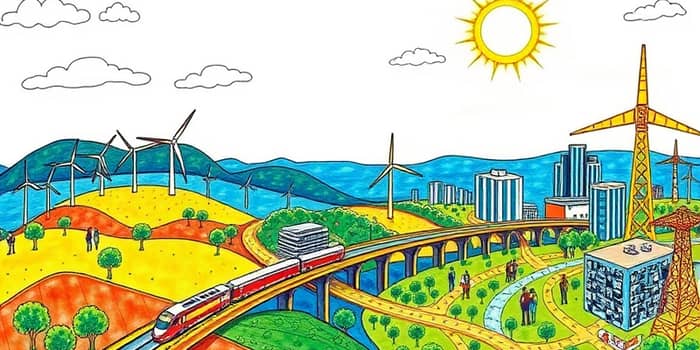
As the world stands at the cusp of transformative change, a prolonged, investment-intensive phase is unfolding across energy, digital networks, transport corridors, and vital social assets. Analysts forecast approximately USD 94–106 trillion in global infrastructure investment by 2040. This massive mobilization of capital is driven by powerful megatrends—decarbonization, digitalization, aging populations, and deglobalization—that promise to reshape economies and societies.
In this article, we explore the scale of this opportunity, the forces propelling it, and practical guidance for investors, policymakers, and stakeholders eager to play a leading role in building our shared future.
Understanding the Scale of the Opportunity
Global need for infrastructure is staggering. McKinsey estimates USD 106 trillion of cumulative investment requirements through 2040 across seven verticals. The G20’s Global Infrastructure Outlook projects USD 94 trillion under a sustainable development pathway—leaving a USD 15 trillion gap if current spending trends persist.
Breaking down the USD 106 trillion by sector reveals where capital must flow:
This scale is matched by robust current momentum: Q1–Q3 2025 private fundraising surpassed USD 175 billion, dealmaking rose 22% year-over-year, and forecasts call for USD 79 billion in annual North American private infrastructure fundraising through 2030.
Riding the Wave of Megatrends
Four overlapping megatrends are reshaping demand and guiding investment seekers toward high-impact, futureproof assets:
- Decarbonization and energy transition: Solar, wind, storage, EV charging, grid modernization.
- Digitalization and data-driven growth: Data centers, fiber networks, edge computing, AI power infrastructure.
- Demographics and urbanization: Aging societies demand healthcare and senior housing; emerging markets need transit, water, and affordable housing.
- Deglobalization and supply chain realignment: Nearshoring and resilient logistics drive investment in ports, inland terminals, and smart rail networks.
These forces are interlinked: the expansion of data centers fuels demand for clean energy, while smart grids and decarbonized power enable efficient transport systems in growing megacities.
Strategies for Investors in a Changing Landscape
Investor sentiment has shifted toward stable, cash-yielding assets with transparent regulatory frameworks. In 2024, fundraising for core and value-add strategies climbed sharply, reflecting a preference for predictable returns. To navigate this evolving environment, consider the following strategies:
- Diversify across sub-sectors to balance risk: combine mature transport concessions with high-growth digital platforms.
- Partner with public entities to leverage guarantees and off-take agreements for renewable energy and social infrastructure projects.
- Deploy capital in phased tranches to mitigate execution risk, especially in large-scale power transmission and urban mobility programs.
Monitoring macro conditions remains critical: projected global GDP growth of 2.8% in 2025 and easing interest rates create a supportive backdrop, but election cycles and trade policy shifts can introduce volatility.
Case Studies and Success Stories
History offers lessons on unlocking latent potential. In Latin America, a consortium modernized port infrastructure through a public-private partnership, improving cargo throughput by 40% within three years and generating reliable annuity-like returns for investors. In Europe, a greenfield data center corridor powered by solar and battery storage achieved 99.9% uptime, attracting blue-chip tenants and commanding premium lease rates.
Closer to the energy transition, a multinational utility’s cross-border HVDC (high-voltage direct current) transmission link connected wind farms off the coast of Northern Europe to urban demand centers, reducing curtailment by 30% and enhancing grid resiliency during peak demand periods.
Implementing Practical Steps Today
For those ready to act, here are tangible first moves:
- Conduct rigorous due diligence focusing on regulatory environment, off-take certainty, and counterparty credit strength.
- Engage local stakeholders early to secure community support and streamline permitting for social and transport projects.
- Incorporate ESG criteria to align investments with sustainability goals and access green finance incentives.
Looking Forward: A Call to Action
The global infrastructure boom is more than an investment theme—it is a generational mission to build resilient, sustainable, and inclusive systems that underpin economic growth and social well-being. Governments, pension funds, insurers, and private capital must collaborate to bridge the USD 15 trillion gap and fulfill the pressing needs of our age.
As we embark on this journey, let us remember that every solar farm erected, every digital backbone laid, every mass transit line commissioned, and every school or hospital constructed brings us closer to a future where opportunity is universal.
Now is the time to step forward with conviction, creativity, and commitment. By aligning capital with purpose, we can transform today’s promise into tomorrow’s prosperity—turning an infrastructure boom into a global investment legacy.
References
- https://www.rolandberger.com/en/Insights/Publications/Infrastructure-investment-outlook-2025.html
- https://www.cbreim.com/insights/articles/infrastructure-quarterly-q4-2025
- https://am.gs.com/en-au/advisors/insights/article/2025/infrastructure-2025-megatrends-mid-market-opportunities
- https://www.dws.com/en-us/insights/alternatives-research/infrastructure/infrastructure-strategic-outlook-2025/
- https://www.cbreim.com/insights/articles/infrastructure-quarterly-q2-2025
- https://www.mckinsey.com/industries/infrastructure/our-insights/the-infrastructure-moment
- https://outlook.gihub.org
- https://www.visualcapitalist.com/global-infrastructure-investment-by-region-and-sector-2025-2040/
- https://kpmg.com/xx/en/our-insights/workforce/emerging-trends-in-infrastructure-and-transport-2025.html
- https://www.bcg.com/publications/collections/infrastructure-investment-report
- https://www.kkr.com/insights/2025-infrastructure-outlook
- https://unctad.org/publication/world-investment-report-2025
- https://www.brookfield.com/views-news/insights/why-infrastructure-compelling-investment-all-cycles
- https://www.ubs.com/us/en/assetmanagement/insights/asset-class-perspectives/infrastructure/articles/infrastructure-2025-outlook.html