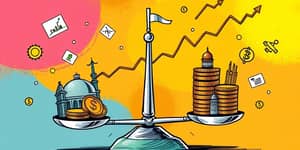
The concept of moral hazard lies at the heart of modern economics and finance. It describes how protection from the consequences of risk—through insurance, guarantees, bailouts, or limited liability—can inadvertently alter behavior, leading individuals and institutions to embrace riskier actions than they otherwise would.
As societies strive to cushion against uncertainty, we must recognize the subtle trade-off between security and responsibility. This article explores the foundations, mechanisms, real-world examples, and policy responses to moral hazard, offering practical insights to navigate these complex dynamics.
Conceptual Foundations
At its core, moral hazard arises when a decision-maker does not fully bear the cost of failure. Paul Krugman defines it as any situation in which one person makes the decision about risk, while someone else absorbs the cost if things go poorly. Economists frame moral hazard as an issue of distorted incentives rather than moral failings.
Key ingredients include:
- Risk-sharing or protection mechanisms such as insurance or government guarantees.
- Information asymmetry and hidden action where the principal cannot observe the agent’s true effort or risk.
- Behavioral changes that occur after coverage or guarantees are in place.
In formal terms, moral hazard sits within principal–agent theory. The principal (insurer, taxpayer, shareholder) shoulders the potential loss, while the agent (insured individual, manager, borrower) selects and executes actions that shape outcomes.
Economic Mechanisms and Theory
Contract theory highlights how unobservable actions can warp optimal risk-sharing agreements. Bengt Holmström’s seminal work showed that when effort is hidden, contracts cannot align incentives perfectly, leading to inefficiencies.
Economists distinguish between two forms:
- Ex ante moral hazard: Riskier behavior taken before an outcome—such as driving less cautiously once insured.
- Ex post moral hazard: Opportunistic actions after an event—like exaggerating a claim or willful default.
Consider a simple health-care model. Without insurance, individuals face a price per unit of care and consume based on that cost. When fully insured, the marginal price falls to zero, causing demand to spike. This overconsumption imposes extra costs on insurers and society without proportional benefit.
This example reveals how even well-intentioned coverage can generate a demand expansion when marginal cost falls, leading to inefficiencies that ripple through markets.
Real-World Domains of Moral Hazard
Moral hazard permeates diverse sectors, distorting decisions whenever downside risk is shared or offloaded.
Insurance Markets
Classic examples emerge in auto, property, health, and income insurance. Once covered, policyholders may drive less carefully, neglect home security, overuse medical services, or reduce job search effort. Insurers counter with deductibles, copayments, and experience-rated premiums, but perfect alignment remains elusive.
Banking and Financial Institutions
The “too big to fail” doctrine illustrates systemic moral hazard. If large banks expect government rescues, they enjoy incentive to increase exposure to risk—leveraging balance sheets for outsized gains while socializing potential losses. The 2008–2009 crisis reinforced this pattern, as bailouts preserved stability but strengthened beliefs that safety nets would return in future crises.
Corporate Governance
Managerial compensation often rewards upside without equivalent penalties for downside. Limited liability further insulates shareholders, enabling firms to adopt aggressive strategies, pursue high-risk acquisitions, or overload debt, comforted by the prospect of external bailouts or legal protections.
Sovereign Debt and International Rescues
Within monetary unions and global lending frameworks, government borrowers and private lenders can cultivate mutual expectations of external support. The Eurozone crisis and IMF programs demonstrate how implicit guarantees distort borrowing and lending, fostering unsustainable debt buildups until market discipline reasserts itself.
Policy Responses to Mitigate Moral Hazard
Achieving the right balance between protection and prudent behavior is a perpetual policy challenge. Common tools include:
- Cost-sharing mechanisms: deductibles, coinsurance, and copayments that reintroduce marginal costs.
- Performance-based contracts: linking rewards and penalties to verifiable actions or outcomes.
- Regulatory oversight: capital requirements, risk limits, and stress testing in banking.
Designing these measures demands careful calibration. Too little protection leaves agents vulnerable; too much invites recklessness. Authorities must also guard against diluting any one actor’s incentive to monitor, inspect, and enforce prudent conduct.
Practical Takeaways for Individuals and Organizations
Whether you’re a consumer, business leader, or policymaker, awareness of moral hazard can guide smarter choices:
- Review coverage details: understand copayments and exclusions to maintain healthy incentives.
- Implement accountability frameworks: tie bonuses or insurance rates to demonstrable risk-reduction efforts.
- Foster transparency: reduce information asymmetry by sharing data and performance metrics.
By embracing targeted incentives and shared responsibility, organizations can harness the benefits of risk protection without surrendering discipline.
Conclusion
Moral hazard underscores a fundamental tension: the very mechanisms designed to shield us from uncertainty can also nudge us toward undue risk. Recognizing this dynamic empowers individuals, firms, and governments to craft smarter contracts, policies, and cultural norms that balance security with accountability.
In the words of leading scholars, the goal is not to eliminate protection, but to manage it. By aligning incentives, enhancing transparency, and maintaining checks on behavior, we can enjoy the comfort of safety nets without unraveling the fabric of responsible decision-making.
References
- https://en.wikipedia.org/wiki/Moral_hazard
- https://www.economicshelp.org/blog/105/economics/what-is-moral-hazard/
- https://corporatefinanceinstitute.com/resources/economics/moral-hazard/
- https://www.youtube.com/watch?v=DdesoErrNk4
- https://mru.org/courses/principles-economics-microeconomics/moral-hazard-adverse-selection
- https://www.masterclass.com/articles/what-is-moral-hazard
- https://ethicsunwrapped.utexas.edu/glossary/moral-hazard