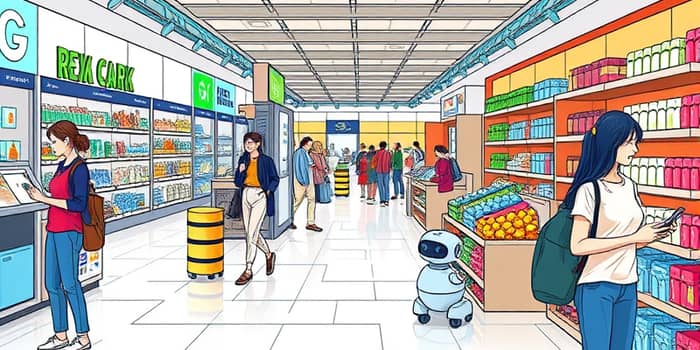
In today’s rapidly evolving marketplace, retailers face an unprecedented combination of economic pressures and technological opportunities. From pressured consumer wallets to generative AI-powered services, the industry is transforming at breakneck speed. This article explores how businesses can navigate shifting consumer behaviors and harness innovation to emerge stronger.
Economic Forces Reshaping Retail
Amid inflationary pressures and global uncertainties, consumer confidence remains at record lows. Less than a quarter of shoppers report feeling secure about personal finances, while 62% express concern. Despite these anxieties, U.S. retail sales rose 4.8% year-over-year by August 2025. Retailers must balance this paradox of cautious consumers driving demand yet choosing value-driven options at every turn.
The holiday season outlook reflects this tension: overall spending is projected to decline by 5%. Generational gaps in behavior are widening; older customers may remain brand-loyal, while Gen Z and Millennials seek cost savings and sustainability. Adapting to these trends requires agility and a deep understanding of evolving shopper motivations.
Budget Pressures and Consumer Adaptation
Economic concerns have motivated 75% of shoppers to change purchasing habits. As prices climb, consumers explore new channels and strategies to stretch their budgets. Retailers who anticipate these shifts can capture share by offering tailored solutions that meet demand for both quality and affordability.
- 46% of shoppers plan to buy more store brands.
- 41% expect to use coupons or digital deals more often.
- Mass merchandisers like Walmart and Aldi are benefiting from split-trip shopping patterns.
- Value-seeking customers compare prices across multiple outlets for the best deals.
By providing private-label options and tiered value propositions, businesses can appeal to cost-conscious consumers without sacrificing brand integrity or margin. Loyalty programs that reward incremental spending and targeted promotions also foster deeper connections with budget-driven segments.
The Omnichannel Imperative
Shoppers today demand frictionless experiences across online and offline touchpoints. Whether ordering on a mobile app for curbside pickup or browsing interactive displays in-store, they expect inventory visibility in real time and harmony between channels. Retailers investing in robust omnichannel platforms report stronger retention and higher average order values.
Key attributes of successful omnichannel strategies include:
- Real-time inventory synchronization across warehouses and storefronts.
- Flexible delivery and pickup options that reflect consumer preferences.
- Unified customer profiles for personalized recommendations in any channel.
Personalization and Technological Disruption
Artificial intelligence and data analytics have shifted from novelty to necessity. Customers now expect hyper-personalized shopping journeys that anticipate needs and deliver dynamic recommendations. Generative AI chatbots answer queries instantly, while predictive engines optimize pricing and promotions in real time.
On the operational side, automation is revolutionizing supply chains and logistics. Robotics in warehouses accelerate order fulfillment, and blockchain solutions enhance transparency. The integration of “just walk out” technologies in stores offers cashier-less convenience, addressing labor shortages and meeting consumer demand for speed.
Sustainability as a Core Strategy
As environmental consciousness grows, sustainability is no longer a niche concern. Consumers—especially younger cohorts—prioritize brands with transparent sourcing and circular business models. Retailers embedding eco-friendly practices throughout their value chains strengthen loyalty and differentiate themselves in a crowded marketplace.
Initiatives range from refill-station programs for household goods to take-back schemes for electronic devices. Companies reporting clear sustainability metrics often see higher engagement and increased foot traffic. Emphasizing supply chain transparency measures and partnering with ethical suppliers builds trust and resilience against regulatory risks.
Evolving Business Models and Success Metrics
Retailers are redefining success beyond sales and profit. Holistic performance metrics now include customer experience, brand advocacy, and community impact. By focusing on these broader objectives, businesses foster long-term growth and social license to operate.
Many leading chains are transforming their physical spaces to serve as both showrooms and fulfillment centers. This approach reduces delivery costs and reinforces brand storytelling through immersive environments. In luxury retail, a 65% increase in U.S. store square footage during early 2025 underscores the appetite for experiential shopping.
Risks and the Road Ahead
Despite impressive innovations, challenges loom. Supply chain volatility—from geopolitical tensions to port strikes—threatens inventory stability. Retailers must invest in resilient networks and diversify sourcing to mitigate disruptions. Data security and privacy concerns also intensify as personalization deepens; transparent data practices are critical for maintaining trust.
The cost of deploying new technologies and sustainable models can strain profitability. Companies must carefully evaluate ROI and seek scalable solutions. Meanwhile, workforce adaptation is imperative: as automation handles routine tasks, staff need training for higher-value roles in customer engagement and creative problem-solving.
Conclusion: A Future of Agility and Experience
The retail landscape in 2025 is defined by consumers who are both cautious and curious—willing to spend on value, experiences, and brands that align with their values. Retailers that move quickly, embrace technological innovation, and maintain authentic connections will lead the next wave of growth.
Ultimately, success hinges on a balanced strategy: optimizing costs without compromising experience, championing sustainability without sacrificing profitability, and empowering employees to deliver creativity and empathy. In this era of reinvention, the most resilient retailers will be those who remain agile, customer-centric, and purpose-driven.
References
- https://www.bcg.com/publications/2025/united-states-retail-predictions
- https://www.northmarq.com/insights/research/consumer-behavior-revolution-adapting-retail-real-estate-meet-new-demands
- https://nrf.com/blog/25-predictions-for-the-retail-industry-in-2025
- https://www.retailcustomerexperience.com/blogs/the-future-of-shopping-is-now-5-consumer-behavior-shifts-retailers-must-embrace/
- https://www.bls.gov/opub/ted/2025/trends-in-retail-trade-holiday-employment-buildups-and-layoffs.htm
- https://www.foodbusinessnews.net/articles/27831-budget-concerns-are-changing-shoppers-retail-behavior
- https://www.mckinsey.com/industries/retail/our-insights/state-of-fashion
- https://www.bringoz.com/how-consumer-behavior-is-changing-in-grocery-shopping/
- https://www.census.gov/retail/sales.html
- https://www.goodwaygroup.com/blogs/retailers-changing-consumer-behavior
- https://www.ey.com/en_us/insights/strategy/macroeconomics/us-retail-sales
- https://www.mckinsey.com/industries/consumer-packaged-goods/our-insights/state-of-consumer
- https://www.pwc.com/us/en/industries/consumer-markets/library/holiday-outlook-trends.html
- https://nielseniq.com/global/en/insights/analysis/2024/how-gen-z-consumer-behavior-is-reshaping-retail/
- https://therobinreport.com/retail-2025-was-a-radical-shift/
- https://www.salsify.com/blog/how-consumer-buying-behavior-is-changing-in-2025-salsify
- https://www.unipart.com/resource/how-the-retail-market-is-influenced-by-consumer-behaviour/