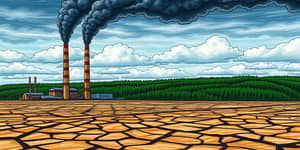
At the heart of modern civilization lies a dynamic force that shapes industries, fuels innovation, and sustains livelihoods across continents. The energy sector, often unseen yet omnipresent, orchestrates the beating pulse of economic progress. In this era of transformation, understanding its trends and embracing its challenges becomes a shared responsibility and an opportunity for collective advancement.
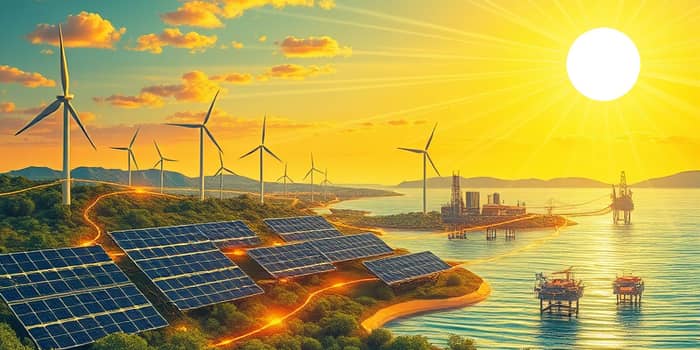
From sprawling solar farms to deep-sea oil platforms, energy systems bridge technology and nature, driving growth while demanding conscience. The following exploration unveils how this sector stands at a crossroads, balancing the imperatives of growth, sustainability, and resilience.
The Central Role of Energy in the Global Economy
The energy sector is fundamental to economic growth, powering industries, transportation, buildings, and digital networks. In 2024, global energy consumption rose by 2.2%, outpacing the 2010–2019 average of 1.5% per year. BRICS nations alone accounted for 43% of total consumption, underscoring their pivotal role in shaping demand.
Although global GDP is projected to nearly double by 2050, annual energy expenditures averaging $6.5 trillion are unlikely to exceed current levels. This phenomenon reflects impressive efficiency gains and widescale electrification, ensuring energy costs constitute a diminishing share of economic output.
Evolving Energy Mix and Emerging Trends
In 2024, fossil fuels continue to dominate primary energy, yet renewables are making remarkable inroads. Renewables supplied 32% of electricity generation, while nuclear and renewables combined reached a historic 40% share. Notably, generation growth broke down as follows:
While coal consumption surged in non-OECD nations—led by China, responsible for 58% of global use—natural gas demand rebounded in the United States and Russia. Across all major scenarios, the carbon intensity of energy is declining, with the steepest reductions arising from ambitious policy measures.
Regional Perspectives: A Diverse Global Landscape
China emerges as a renewable powerhouse, adding 278 GW of solar PV and 80 GW of wind capacity in 2024, now holding nearly half of G20 installations. Europe, balancing climate ambition with competitiveness, continues strong renewables buildouts but risks missing some 2030 targets. Meanwhile, Asia-Pacific and the Middle East recorded electricity generation growth exceeding 5%.
In both the United States and the European Union, burgeoning sectors like data centers and transport electrification are driving unprecedented power demand. Each region, with its unique policy frameworks and resource endowments, offers distinct opportunities and formidable challenges in the transition toward a cleaner energy future.
Driving Forces Behind Energy Transformation
Electrification stands at the forefront, with electricity’s share of final energy climbing from 21% in 2023 to an anticipated 43% by 2060. Global power demand is set to rise by 120% over this period. In 2024, electricity consumption surged by 4.3%—outpacing GDP growth of 3.2%—as industries, homes, and vehicles shift from fossil fuels to electric alternatives.
Simultaneously, digitalization fuels new consumption patterns. The rapid expansion of data centers, cloud computing, and artificial intelligence infrastructure is driving demand in mature markets. Companies and governments must innovate to ensure that technological progress aligns with sustainability goals.
Renewable Technologies and Innovation
Solar PV capacity is set to exceed 3,000 GW by the end of 2025, with China and Europe leading at 47% and 20% shares, respectively. In 2024 alone, nearly 700 GW of renewable capacity was added—80% of it solar—while behind-the-meter solar and battery systems are projected to represent 13% of generation by 2060. Wind power now contributes 9% of G20 electricity, and electric vehicle sales surpassed 17 million units in 2024, capturing 20% of global auto sales. Green hydrogen could account for up to 7% of the energy mix by 2050 under aggressive climate scenarios.
Efficiency, Decarbonization, and Environmental Impact
Between 2010 and 2025, renewables and nuclear energy have displaced 1,371 exajoules of fossil fuels, avoiding 110 gigatonnes of greenhouse gas emissions. As per capita electricity use climbs toward between 4.8 and 8.3 MWh by 2050, carbon intensity continues to fall across all modeled pathways. Achieving net zero will demand that meaningful emissions reductions require commitment from both public institutions and private enterprises.
Investment Patterns and Economic Implications
Despite rising GDP, global energy spending remains stable, reflecting the low operating costs of renewables and gains from efficiency. Households worldwide benefit as energy bills become a smaller fraction of expenses, freeing income for other needs. Investors eyeing long-term returns find that sustainable assets offer resilient performance, with growth opportunities in distributed solar, grid upgrades, and emerging fuels.
Challenges, Uncertainties, and Future Outlook
Key challenges persist: geopolitics can disrupt supply chains and investment flows; policy uncertainty yields divergent outcomes in reference versus ambitious climate scenarios; some economies still increase coal use; and rapid renewable expansion faces grid, storage, and manufacturing constraints. Addressing these issues requires cohesive strategies, robust regulations, and collaborative innovation.
- Geopolitical tensions and energy security risks
- Policy variability and regulatory frameworks
- Persistent reliance on fossil fuels
- Infrastructure bottlenecks and grid integration
Looking ahead to 2030 and beyond, businesses, governments, and individuals can take concrete steps: advocate for clear decarbonization targets, invest in clean energy research, adopt energy-efficient practices, and support community-scale renewables. The road to a sustainable and prosperous future demands collective action drives transformation, blending innovation with empathy to power economies and protect the planet.
References
- https://www.dnv.com/energy-transition-outlook/2025/
- https://www.energyinst.org/statistical-review
- https://yearbook.enerdata.net/total-energy/world-consumption-statistics.html
- https://www.rff.org/publications/reports/global-energy-outlook-2025/
- https://www.enerdata.net/publications/reports-presentations/world-energy-trends.html
- https://www.mckinsey.com/industries/energy-and-materials/our-insights/global-energy-perspective
- https://www.eia.gov/outlooks/aeo/
- https://kpmg.com/ie/en/insights/energy-utilities-telecoms/statistical-review-of-world-energy-2025.html