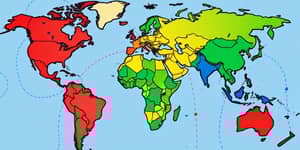
The modern gig economy defies simple description. From remote freelancing platforms to rideshare apps, the boundaries between local work and global opportunity have blurred. This vast ecosystem now spans hundreds of millions of workers and trillions of dollars in activity, reshaping how we think about labor, value, and community in the digital age.
Definitions vary wildly, and that ambiguity fuels both excitement and debate. As you journey through this analysis, you’ll discover practical insights and inspiring stories that demonstrate how individuals and businesses can thrive in this interconnected world.
Definitions and Scope
At its broadest, the gig or platform economy includes any arrangement where individuals offer services without traditional employment contracts. In contrast, a narrower view focuses on digital intermediaries that match supply and demand in real time.
Key categories include:
- Non-employee, contract, freelance, or on-demand work mediated through digital or informal channels.
- Platform-based, on-demand digital work such as rideshare driving or food delivery.
- Online tasks—from micro-jobs to professional consulting—sourced and delivered via the internet.
- Asset-sharing services that let individuals monetize under-utilized resources, like spare rooms or vehicles.
Understanding these nuances is essential to grasp the full scale of this phenomenon and its implications for workers and economies alike.
Global Scale and Economic Footprint
The gig economy’s footprint is staggering. Estimates of the global online workforce range from 154 million to 435 million, representing roughly 4.4%–12.5% of all workers worldwide. When offline gigs and solo businesses are included, the number climbs even higher, capturing about 12% of the global labor force by 2025.
Revenue figures vary with definition. The platform-driven subset is projected between $455 billion and $646 billion by 2025, while broader analyses place total gig revenues near $3.8 trillion in 2022 and a $3 trillion contribution to global GDP by 2025.
Future projections remain bullish, with some forecasts estimating a $2.18 trillion market by 2034 and a 15%–16% compound annual growth rate over the next decade.
U.S. as a Core Hub in a Global System
The United States stands at the epicenter of the freelance revolution. Approximately 72.9 million Americans engaged in independent work in 2025, accounting for about 35% of the national workforce. Full-time independent workers more than doubled from 13.6 million in 2020 to 27.7 million in 2024.
This surge has substantial economic impact. U.S. freelancers contributed $1.27 trillion to the economy in 2023, with skilled professionals earning around $1.5 trillion by 2024–2025. By 2027, projections suggest that over half of American workers will have freelanced in some capacity.
Sectorally, tech, business management, and marketing dominate the U.S. freelance scene, while ridesharing and delivery services hold significant market share in location-based segments.
Cross-Border Dynamics and Geographic Reach
The phrase rapidly internationalizing labor market captures a core dynamic of today’s gig landscape. Remote work platforms have obliterated geographic constraints, allowing clients in high-cost regions to hire talent in lower-cost areas—and vice versa.
About 82% of freelancers report more opportunities than the previous year, driven largely by cross-border engagements. Wage arbitrage benefits skilled workers in the Global South, who can earn rates far above local norms. Yet this also exerts downward pressure on rates in high-income regions, sparking debates about fair compensation and global equity.
A graphic image of a designer in Lagos collaborating with a developer in Bangalore and a marketer in Warsaw now feels commonplace—a testament to the borderless possibilities and the challenges they entail.
Platform Ecosystem and Sectoral Breakdown
Major platform categories illustrate the diversity of the gig economy:
- Knowledge and creative services: Upwork, Fiverr, Toptal, Freelancer.com.
- Transportation and delivery: Uber, Lyft, DoorDash.
- Asset sharing: Airbnb and similar home-rental platforms.
- Micro-task and crowdwork: data labeling, testing, content moderation.
Transportation services account for about 58% of global gig revenues today, but high-margin professional and creative services are growing rapidly, shifting the value proposition toward skilled knowledge work.
Worker Demographics and Inequality
Millennials and Gen Z lead the charge into gig work, valuing flexibility and autonomy. Yet older generations also participate—baby boomers engage in three times as many full-time gigs compared to millennials in some surveys, using freelance roles to extend their careers or supplement retirement income.
Many freelancers work between 11 and 30 hours per week on gigs, while a dedicated core treats this work as a primary livelihood. Income distribution is uneven, with top performers in tech and consulting earning six-figure incomes, and micro-task workers often struggling to reach local living wages.
Bridging these gaps requires both innovation and policy interventions that safeguard fair pay and labor rights.
Regulation, Challenges, and Worker Protections
Gig work operates in a regulatory gray zone. Policymakers wrestle with classification debates—employee versus contractor—and with ensuring access to benefits like health insurance, retirement savings, and collective bargaining rights.
Some jurisdictions are pioneering portable benefit models, where contributions follow the worker across gigs. Others are exploring sectoral bargaining councils that set minimum rates and working conditions for platform-mediated work.
Balancing innovation with protection remains a central challenge: how to preserve the flexibility and autonomy that so many value, while ensuring no one falls through the cracks.
Future Scenarios and Emerging Trends
Looking ahead, several trajectories could redefine the gig economy’s next decade. Automation and AI will transform task allocation, potentially replacing routine jobs while creating new specialized roles.
Decentralized platforms, driven by blockchain and smart contracts, may offer more equitable fee structures and transparent governance. Meanwhile, skills platforms tied to micro-credentials could enable workers to showcase verified competencies, enhancing trust and matching efficiency.
These shifts introduce uncertainty but also foster optimism. A compelling narrative that evokes emotion emerges when we imagine millions of professionals collaborating seamlessly across time zones, united by shared projects and mutual respect.
Practical Insights for Gig Workers and Clients
For workers entering this dynamic field, success hinges on continuous skill development, personal branding, and strategic networking. Creating a diversified portfolio—mixing long-term contracts with shorter tasks—can stabilize income streams.
Clients can harness gig talent by articulating clear project scopes, offering fair compensation, and investing in remote onboarding processes that build trust and engagement. Establishing performance metrics and feedback loops ensures quality and fosters long-term partnerships.
Above all, both sides thrive when they embrace collaboration over competition, recognizing that a healthy gig ecosystem depends on shared value and mutual respect.
The gig economy’s global footprint is more than a statistic—it is a living tapestry of human ingenuity, resilience, and adaptation. By understanding its scale, challenges, and opportunities, we can build a more inclusive future where everyone has the tools to contribute and succeed, linking local workers to global clients in meaningful ways.
References
- https://blog.theinterviewguys.com/the-state-of-the-gig-economy-in-2025/
- https://www.hrstacks.com/gig-economy-freelance-work-statistics/
- https://carry.com/learn/gig-economy-trends-for-freelancers-and-self-employed-workers
- https://gigeconomydata.org/basics/how-many-gig-workers-are-there.html
- https://www.resumenerd.com/blog/gig-economy-statistics
- https://www.weforum.org/stories/2025/06/the-gig-economy-ilo-labour-platforms/
- https://oysterlink.com/spotlight/gig-economy-statistics/
- https://www.census.gov/library/stories/2025/07/nes-gig-economy.html
- https://www.deloitte.com/us/en/services/consulting/articles/future-of-gig-economy-shared-services-delivery-model.html