In today’s complex financial world, interest rates play a central role in almost every economic decision you make, from taking out a loan to building savings. By understanding how these rates are determined, what drives their rise and fall, and how they influence both short-term spending and long-term investment, you can make informed financial decisions and secure a stronger future. This article will guide you through the key concepts, the numbers you need to know, and practical steps you can take to stay ahead of shifting rates and optimize your personal and professional finances.
What Are Interest Rates?
At its core, an interest rate represents the cost of borrowing money or the reward for saving it. In simple terms, it is the percentage charged on borrowed money or paid out on deposits, usually expressed on an annual basis. Lenders use interest rates to cover risks and earn profits, while savers rely on them to grow their funds over time.
There are several different ways to measure and apply interest:
- Nominal Rate: The stated rate before accounting for inflation.
- Real Rate: Adjusted to subtract inflation, showing the true cost or benefit.
- Fixed vs. Variable Rates: Fixed rates remain unchanged for the life of a loan, while variable rates can rise or fall with market conditions.
By distinguishing between these types, you can choose the option that aligns best with your financial goals, risk tolerance, and time horizon.
How Interest Rates Are Set
In most developed economies, policy or benchmark interest rates are set by a central bank. In the United States, the Federal Reserve adjusts the federal funds rate, which is the rate at which banks lend to each other overnight. Similar institutions—the European Central Bank, the Bank of Canada, and others—use analogous tools to guide borrowing costs across their financial systems.
The Fed controls rates primarily through two mechanisms: the federal funds rate and the discount rate, the interest charged on short-term loans to commercial banks. As of May 2025, the U.S. benchmark rate stood at about 4.33%, a figure that cascades through consumer loans, mortgages, credit cards, and business financing.
These adjustments serve powerful economic goals: to control inflation without stifling growth, encourage spending or saving, and stabilize overall economic activity by balancing job creation against price stability.
Effects on Borrowing and Spending
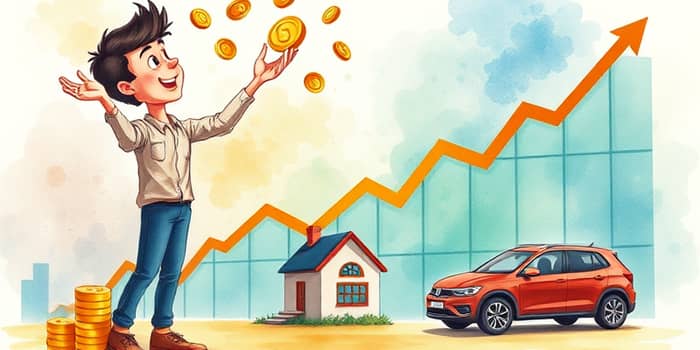
Interest rates directly influence the cost of loans. When rates fall, consumers find it cheaper to finance big-ticket purchases, such as homes and cars. A 1% cut in rates can boost GDP growth by 0.5–0.8% within a year, reflecting increased spending and refinancing activity.
Conversely, when rates rise, fees for mortgages, auto loans, and credit card balances climb higher, shrinking disposable income and dampening consumer demand. A 1% rate increase could reduce GDP growth by roughly 0.6%, signaling less borrowing and more cautious spending.
Businesses also feel the pinch or the boost. Lower rates reduce the cost of servicing debt, spurring investment in new projects, equipment, and hiring. Higher rates, however, raise the price of capital, potentially curbing expansion plans, cutting back on hiring, and slowing overall corporate growth—particularly for small businesses sensitive to even modest cost increases.
Impact on Saving and Investing
Savers benefit from higher interest rates, which translate into more attractive yields on savings accounts, certificates of deposit, and newly issued bonds. This environment encourages individuals to set aside more money, boosting household financial resilience.
Investors face a more nuanced landscape. Stocks often thrive in low-rate environments, as cheaper borrowing fuels corporate profits and economic expansion. When rates climb, stock valuations can dip because future earnings are discounted at higher rates. Bonds, on the other hand, have an inverse relationship with interest rates—existing bond prices fall when new issues offer better yields.
Your retirement accounts and long-term portfolios can shift dramatically in response. During periods of rising rates, reallocating between stocks and bonds to retain long-term growth potential can help maintain balance and protect against volatility.
Interest Rates and Inflation Dynamics
One of the primary tools central banks use to manage inflation is adjusting interest rates. Raising rates makes borrowing more expensive, cooling consumer and business spending, which in turn can contain rising prices by reducing demand for goods and services. Lower rates risk higher inflation but can revitalize a sluggish economy.
These rate changes and inflation levels feed into expectations. If consumers and businesses anticipate continually rising prices, they may increase their own prices or wages preemptively, creating a self-reinforcing loop. Well-timed and measured rate hikes are essential to break this cycle and maintain long-term price stability.
Sector-Specific and Global Impacts
Housing markets are acutely sensitive to rate movements. Mortgage costs surge or recede in tandem with benchmark rates, directly affecting affordability and buyer demand. Sharp rate hikes can cool overheated markets, while rate cuts can spark booms in construction and refinancing.
The automotive sector experiences similar shifts. Auto loans become more or less affordable, directly altering sales volumes. Industries linked to big-ticket items—appliances, furniture, and even travel—feel the ripple effects of changing financing costs.
On the international stage, higher domestic rates often strengthen the national currency, making exports pricier abroad and imports cheaper at home. The opposite holds when rates fall, influencing trade balances and global investment flows.
Psychological and Behavioral Effects
Beyond concrete costs and returns, interest rates shape sentiment. Lower rates generally boost consumer confidence, encouraging spending and investment. By contrast, rising rates can trigger caution, prompting households to save more and businesses to defer major projects.
As debt servicing costs change, so does disposable income for daily expenses and luxury purchases. Understanding this emotional undercurrent can help you anticipate broader market trends and align your own financial choices with prevailing economic moods.
Practical Tips for Consumers
- lock in a long-term fixed-rate mortgage when borrowing costs are low to avoid surprises.
- Consider refinancing existing debt to reduce your monthly payment burden during high-rate periods.
- Build an emergency fund to shield against rate hikes and unexpected expenses.
- Balance your portfolio by including bonds and equities to diversify risk across asset classes.
- Monitor central bank announcements to anticipate market shifts and adjust strategy.
- Time major purchases like homes or cars to make the most of lower borrowing costs.
By arming yourself with knowledge about how interest rates are set and how they affect every facet of the economy, you can manage debt effectively, enhance your savings strategy, and position your investments for success. Remember, financial markets ebb and flow, but a clear plan rooted in sound principles will help you thrive no matter where rates move.
References
- https://dechtmanwealth.com/insights/blog/how-interest-rates-impact-the-economy
- https://www.rosenbergresearch.com/2025/05/23/the-impact-of-interest-rates-on-the-economy/
- https://www.bankofcanada.ca/2023/12/how-higher-interest-rates-affect-inflation/
- https://www.invesco.com/us/en/insights/what-is-interest-rate.html
- https://www.bankrate.com/banking/federal-reserve/how-federal-reserve-impacts-your-money/
- https://www.federalreserve.gov/faqs/why-do-interest-rates-matter.htm
- https://arongroups.co/forex-articles/what-is-interest-rate-how-does-it-affect-the-economy/
- https://www.youtube.com/watch?v=NM-jPK7ODO8