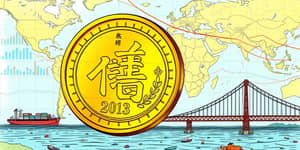
In a world defined by interconnected economies and rapid technological advancements, foreign direct investment (FDI) emerges as a powerful force shaping global prosperity. From bustling data centres to cutting-edge semiconductor plants, FDI transcends financial transactions and becomes a catalyst for innovation, growth, and cross-border collaboration.
Understanding Foreign Direct Investment
At its core, FDI describes a scenario where an investor acquires sufficient ownership in a foreign enterprise to influence its operations. According to the IMF, ownership of at least 10% of the voting power qualifies a transaction as FDI rather than a passive portfolio investment.
Unlike portfolio flows that focus on returns from stock or bond holdings, FDI involves more than just capital. It carries an element of governance and long-term commitment to the host economy.
- cross-border investment where an investor acquires a meaningful stake
- control or significant influence over management decisions in the target firm
- Mergers and acquisitions, greenfield ventures, and joint ventures
- Wholly owned subsidiaries or acquisitions of existing operations
Global Trends and Dynamics
After two consecutive years of decline, global FDI flows rebounded in 2025, rising by 14% to approximately $1.6 trillion. However, the true picture is more nuanced: conduit jurisdictions accounted for over $140 billion of this increase, highlighting the fragility of underlying investment activity.
Developed economies led the recovery, with inflows surging 43% to $728 billion. The European Union posted a remarkable 56% jump, driven by major cross-border M&A in Germany, France, and Italy. In contrast, developing economies saw a slight 2% dip to $877 billion, and many least developed countries remain on the sidelines.
Sector Spotlight: New Frontiers
Investment is increasingly channeled into capital-intensive, technology-driven sectors leading growth. Data centres, fueled by AI and digital services, captured over one-fifth of greenfield project values in 2025, with more than $270 billion in announced investments worldwide.
Semiconductors also gained momentum, with new project values climbing 10.6% to $138.2 billion. North America and Asia-Pacific emerged as hotspots, competing to host the next generation of chip fabrication facilities.
Top Destination: The United States
The United States remains the world’s premier FDI destination, with cumulative inward stock reaching $5.7 trillion by the end of 2024—nearly one-third of the global total. Its allure rests on a combination of stability, scale, and innovation.
Key attractiveness factors include a large consumer market and skilled workforce, transparent regulatory environment, deep capital markets, and a culture that prizes entrepreneurship. Japan, Canada, and Germany top the list of investor origins, reflecting longstanding commercial ties.
Motives Driving Overseas Expansion
Why do firms cross borders in pursuit of new opportunities? Economic theory identifies several classic motives:
- Market-seeking: Accessing local customers more directly
- Efficiency-seeking: Optimising production costs through labour or resource advantages
- Resource-seeking: Securing vital inputs such as minerals or agricultural commodities
- Strategic-asset-seeking: Acquiring brands, technology, or advanced capabilities
These drivers interact with host-country characteristics like infrastructure quality, regulatory clarity, and political stability to shape investment decisions.
Balancing Pros and Cons
Foreign direct investment can unlock growth and innovation, but it also carries risks and challenges. On the positive side, FDI often:
- Brings new technology and managerial expertise
- Creates jobs and supports skills development
- Enhances integration into global value chains
- Promotes competitive markets and efficiency gains
However, potential downsides merit careful consideration. Host countries may face profit repatriation, loss of policy autonomy, or crowding out of local enterprises. Investors, conversely, contend with cultural barriers, regulatory changes, and geopolitical tensions that can affect returns.
Policy and Future Outlook
Governments and multilateral institutions play a pivotal role in shaping the FDI landscape. By crafting stable, transparent regulatory frameworks and offering targeted incentives, policymakers can attract high-quality investment that aligns with long-term development goals.
Looking ahead, emerging themes will influence FDI patterns: decarbonisation efforts, digital transformation, supply-chain diversification, and evolving geopolitical alliances. Countries that adapt swiftly—investing in education, infrastructure, and innovation ecosystems—will be best placed to capture the next wave of cross-border capital.
In a rapidly changing world, embracing global connectivity and shared prosperity through foreign direct investment offers a pathway to sustainable growth. By understanding its complexities and crafting thoughtful strategies, businesses and nations alike can harness FDI’s potential to transcend borders and build a more interconnected, resilient future.
References
- https://unctad.org/news/global-foreign-investment-14-2025-growth-concentrated-developed-economies
- https://www.weforum.org/stories/2014/12/what-drives-foreign-investment/
- https://www.voronoiapp.com/economy/Top-Global-Sectors-in-2025-for-Foreign-Direct-Investment-8284
- https://researchfdi.com/foreign-direct-investment-advantages-disadvantages/
- https://globalbusiness.org/foreign-direct-investment-in-the-united-states-2025/
- https://www.oecd.org/en/publications/the-determinants-of-foreign-direct-investment_641507ce-en.html
- https://usreport2025.fdiintelligence.com
- https://www.oecd.org/en/publications/fdi-in-figures-october-2025_57d0218c-en.html
- https://digitalcommons.iwu.edu/cgi/viewcontent.cgi?article=1050&context=econ_honproj
- https://www.bea.gov/news/2025/us-international-investment-position-1st-quarter-2025-and-annual-update
- https://www.atlanticcouncil.org/in-depth-research-reports/report/attracting-foreign-direct-investments/
- https://unctad.org/publication/world-investment-report-2025
- https://www.ftlocations.com/knowledge-hub/report/fdi-report-2025