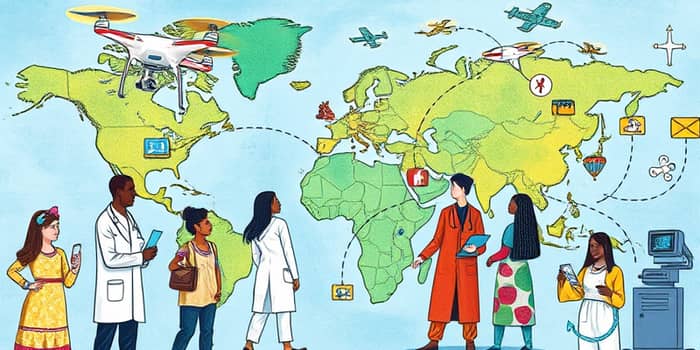
In an era defined by interconnected risks and shared opportunities, investing in global health has never been more urgent. From the peaks of policy debates in capitals to the frontlines of community clinics, the drive to close funding gaps and deploy cutting-edge tools is reshaping our collective future.
This article explores three pillars of transformation: why investing in global health matters, the most important innovations driving impact, and how new financing models and policies are catalyzing change. We draw on data, real-world examples, and expert insight to inspire action and guide decision-makers, philanthropists, and advocates toward a healthier world.
Why investing in global health matters
In 2015, world leaders adopted the Sustainable Development Goals, pledging to achieve universal health coverage by 2030. As of 2023, progress has reached only half the target. Before COVID-19, the World Health Organization estimated that low- and middle-income countries (LMICs) need an additional US$371 billion per year to meet health-related SDGs. Preparing for future pandemics requires US$31.1 billion annually, one-third of which must come from international financing.
Global health spending surged to about US$9 trillion in 2020—nearly 11% of global GDP—yet a chronic investment gap in health undermines resilience. The challenge is not total spending, but where and how money is deployed. Strategic investments leverage stronger health systems, advance research, and build social trust.
Beyond morality, global health is an essential pillar of shared security and economic strategy. A disease anywhere is a disease everywhere: pathogens can traverse continents in hours, threatening both health and economies. Underfunded systems breed higher mortality, exacerbate chronic conditions, and sow instability. Conversely, every dollar invested yields returns in reduced outbreak costs, strengthened diplomatic ties, and economic growth.
Cutting support risks program collapse against HIV/AIDS, malaria, tuberculosis, and neglected tropical diseases—and invites geopolitical competitors to fill the void. For the U.S., global health investment represents a tiny fraction of government spending but protects domestic populations, stimulates job creation, and fosters goodwill abroad.
The most important innovations in global health
Technological breakthroughs and social inventions are converging to accelerate progress in resource-constrained settings. Four domains are driving change:
- Biomedical and genetic tools
- Digital health and data analytics
- Delivery models and point-of-care solutions
- Behavioral and social innovations
From Deloitte’s top healthcare innovations list, several stand out for global impact:
- Next-generation sequencing for outbreak detection tailors treatments and tracks emerging pathogens in real time.
- 3D-printed devices produce tailored, low-cost medical devices such as customized prosthetics and surgical tools.
- Artificial intelligence enables diagnostics, radiology support, and predictive analytics in settings with limited specialists.
- Point-of-care diagnostics deliver rapid testing for HIV, malaria, TB, and maternal health in remote clinics.
- Telehealth and convenient care models reduce travel burdens and expand access to specialists.
Digital health is entering a critical phase: stakeholders refine evidence standards, reimbursement pathways, and business models to integrate software-based tools into mainstream care. By 2025, over 300 billing codes will support digital health in the U.S., including 117 for software technologies. Policymakers worldwide are creating accelerated regulatory pathways tied to high-quality evidence and global trial strategies.
- High-quality randomized trials in diverse settings
- Accelerated approval lanes for digital therapeutics
- Reimbursement models that reward outcomes
- Global evidence frameworks to scale innovations
The Bill & Melinda Gates Foundation highlights six frontline innovations already transforming outcomes:
- Ready-to-use therapeutic food revolutionizing acute malnutrition treatment
- Next-generation malaria prevention nets combating insecticide resistance
- Drones delivering vaccines, blood, and supplies to remote communities
- Improved maternal and newborn health diagnostics and devices
- Rapid molecular TB diagnostics and shorter treatment regimens
- Biosensors and wearables monitoring chronic conditions and maternal health
These advances exemplify how remote diagnostics at point of care and AI-connected wearables can empower patients and providers, while digital twins allow clinicians to predict risks and personalize interventions before crises arise.
How new financing models and policies are shaping impact
Closing the investment gap demands innovative financing. Blended finance, social impact bonds, and public-private partnerships are unlocking new capital and aligning incentives. For example, development impact bonds tie investor returns to measurable health outcomes, transferring program risk to private partners and ensuring accountability.
Multilateral development banks and philanthropic consortia are co-investing in vaccine development, supply chain modernization, and workforce training. Debt-for-health swaps allow countries to reallocate debt service toward health system strengthening. Meanwhile, global tax reforms aim to recycle revenues into universal health coverage.
Policy advances at national and regional levels are critical. Many LMICs are expanding health insurance schemes, integrating digital ID systems for beneficiary tracking, and streamlining procurement to boost efficiency. On the global stage, the Pandemic Fund and initiatives like COVAX illustrate coordination across governments, donors, and manufacturers.
Ultimately, embedding health in all policies—from trade to education—creates a virtuous cycle: healthier populations spur economic growth, which generates resources for further health investments. By harnessing blended finance and social impact bonds, aligning regulatory incentives, and fostering cross-sector collaboration, we can transform the narrative from dependency to empowerment.
The journey toward universal health, pandemic preparedness, and equitable innovation is complex but within reach. With sustained commitment, creativity, and strategic capital deployment, we can build resilient systems that safeguard every community. Now is the time to invest boldly in global health innovations and secure a healthier world for generations to come.
References
- https://www.deloitte.com/us/en/industries/life-sciences-health-care/articles/top-10-health-care-innovations.html
- https://www.who.int/news-room/commentaries/detail/investing-in-global-health--a-common-objective
- https://www.gatesfoundation.org/ideas/articles/global-health-innovations/
- https://tripleiforgh.org
- https://www.medtronic.com/en-us/our-company/stories/6-healthcare-tech-trends-for-2026.html
- https://ghicfunds.org
- https://www.iqvia.com/insights/the-iqvia-institute/reports-and-publications/reports/digital-health-trends-2025
- https://www.thinkglobalhealth.org/article/small-global-health-investments-big-benefits-united-states
- https://pmc.ncbi.nlm.nih.gov/articles/PMC12071628/
- https://sif.gatesfoundation.org/portfolio/global-health-investment-fund/
- https://www.ghtcoalition.org/resources-item/what-innovations-have-the-greatest-potential-to-transform-global-health-
- https://www.ncbi.nlm.nih.gov/books/NBK458469/
- https://firstup.io/blog/healthcare-technology-trends/
- https://www.youtube.com/watch?v=kqrGoTmOLbI