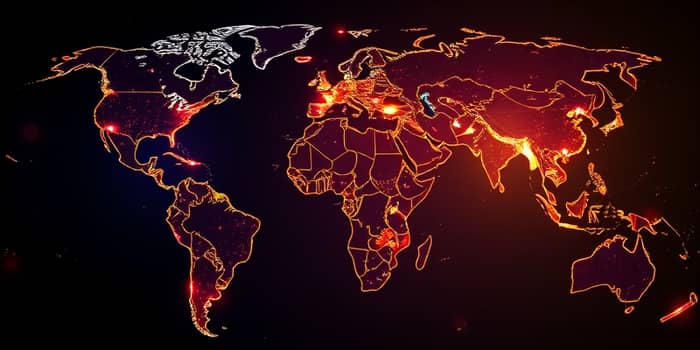
As the original BRICS bloc set the stage for accelerating economic power in the early 21st century, a new frontier of diverse, multi-polar set of growth markets is emerging. These mid-sized economies in Asia, Africa, the Middle East, Latin America, and Eastern Europe combine young populations, industrial depth, digital adoption, and critical commodities. Understanding this “next wave” is vital for investors, policymakers, and business leaders seeking supply-chain diversification and resilience in an ever-shifting global landscape.
From BRICS to a Broader Frontier
The BRICs concept (Brazil, Russia, India, China, later South Africa) dominated discussions for decades. Yet acronyms such as N-11, MINT, CIVETS and E7 never fully captured the dynamic, multipolar reality of growth beyond a handful of large economies. Today’s momentum springs from a broader set of countries where demographics, technology, and resources align to create powerful tailwinds.
Policy frameworks have matured: flexible exchange rates, stronger central banks, reduced imbalances and higher foreign reserves have all contributed to greater macroeconomic stability. Meanwhile, global investors are recalibrating portfolios, eyeing markets that outperformed developed peers in corporate earnings growth and equity returns in recent years.
Macro Outlook: Growth Drivers and Earnings
Emerging markets are forecast to sustain roughly 4% GDP growth annually in 2025–2026, outpacing advanced economies. Inflation has eased toward 5%, and corporate profits are set to climb by around 20% in 2026, fueled by technology, cyclical recovery, and commodities. These conditions underpin a potential multi-year phase of EM outperformance, especially if the U.S. dollar softens.
Structural tailwinds shaping the next wave include:
- Rapid smartphone and internet adoption driving fintech, e-commerce, and digital services leapfrogging.
- Green transition and critical minerals as demand for lithium, cobalt, nickel, copper and rare earths surges with renewables and EVs.
- Urbanization and infrastructure build-out linking housing, transport and logistics to regional corridors and the Belt and Road Initiative.
- Young demographics creating large labor forces and expanding consumer markets across Asia, Africa and Latin America.
Evolving Groupings: Acronyms and Alliances
While acronyms offer memorable narratives, the true constant is shared structural strength. BRICS has morphed into BRICS+, incorporating UAE, Egypt, Ethiopia, Indonesia and Iran, with Saudi Arabia as a participant. This reflects a push for greater sovereignty from Western financial systems through dedollarization, local currency trade, climate finance and technology cooperation.
Other labels spotlight rising stars:
- BIMI: Brazil, India, Mexico, Indonesia—four large, populous, diversified economies beyond China.
- VIBES: Vietnam, India, Brazil, UAE—underscoring trade, growth projections and strategic positioning.
- MINT and CIVETS: Mid-sized markets with youthful demographics, industrial bases and stable financial systems.
Regional Hotspots: Where to Watch
The next wave of growth is geographically diverse but united by common traits: young populations, digital ecosystems, resource endowments and strategic geopolitics. Key regions include:
- Asia-Pacific beyond China and India
- Africa as the “new frontier”
- Middle East’s digital and energy hubs
- Latin America’s commodity and consumer markets
- Emerging Eastern Europe benefiting from near-shoring
In Southeast Asia, Vietnam, Indonesia, the Philippines and Malaysia rank high in investment indices, driven by China+1 supply-chain diversification and robust digital adoption. Africa’s frontier markets—Nigeria, Kenya, Ghana, and South Africa—leverage rich resources, infrastructure projects and youthful labor pools. The Middle East’s UAE and Saudi Arabia accelerate fintech, tourism and renewables, while parts of Latin America such as Colombia and Peru gain from minerals, agribusiness and intra-regional trade.
Emerging Eastern European markets like Poland and Romania benefit from reshoring electronics, automotive and logistics away from higher-cost geographies, backed by EU funding and digital connectivity enhancements.
Strategies for Investors and Policymakers
To harness this next wave of opportunity, stakeholders should:
• Conduct rigorous country risk analysis, evaluating governance, macro stability and policy consistency.
• Target sectors aligned with structural trends: digital platforms, green energy, critical minerals, logistics and consumer goods.
• Engage in local partnerships to navigate regulations, cultural nuances and market access.
• Monitor geopolitical shifts in de-risking, friend-shoring and trade initiatives that may open new corridors.
Policymakers in emerging markets must prioritize transparent governance, invest in education and digital infrastructure, and foster public-private collaboration to attract sustainable capital. Likewise, international institutions and development banks can provide technical assistance, finance for climate projects and platforms for South-South cooperation.
Ultimately, acronyms may fade, but the fundamental drivers—youthful demographics, digital transformation, resource richness and strategic reorientation of global supply chains—will define the next era of growth. By recognizing this diverse, multi-polar set of growth markets today, investors and leaders can shape a more resilient, inclusive and dynamic global economy for tomorrow.
References
- https://www.youtube.com/watch?v=ZJahiXx8x8c
- https://luthresearch.com/glossary/where-is-the-highest-potential-for-growth-in-emerging-markets/
- https://www.youtube.com/watch?v=dr28jzYJRrM&vl=en
- https://www.triodos-im.com/articles/2025/emerging-markets-outlook-2026
- https://www.phenomenalworld.org/analysis/brics-in-2025/
- https://stockalpha.ai/alpha-learning/beyond-brics-emerging-market-opportunities-and-risks-in-2026
- https://milkeninstitute.org/topics/finance/economic-landscape/emerging-markets-growth
- https://www.lazardassetmanagement.com/li/en_gb/research-insights/investment-insights/investment-research/emerging-markets-outlook-2026
- https://www.cfr.org/event/brics-nations-and-future-emerging-markets
- https://carnegieendowment.org/russia-eurasia/research/2025/03/brics-expansion-and-the-future-of-world-order-perspectives-from-member-states-partners-and-aspirants
- https://www.lseg.com/en/insights/ftse-russell/bimi-the-next-emerging-power-play
- https://www.bcg.com/publications/2024/brics-enlargement-and-shifting-world-order