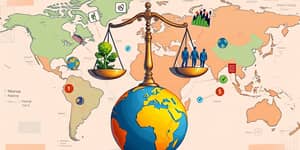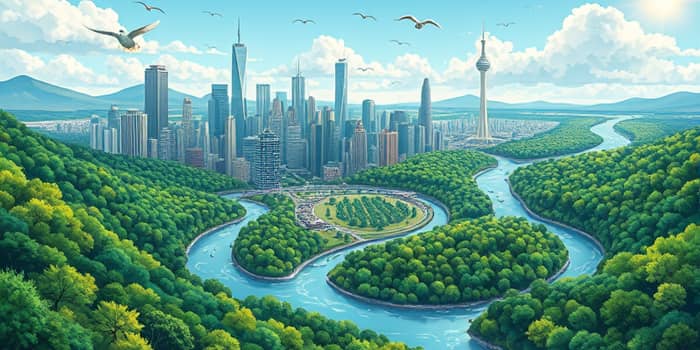
In an era of rapid change, the concept of economic and social progress must be intricately tied to the health of our planet. Sustainable growth offers a pathway where prosperity and stewardship work hand in hand.
This article examines the origins, frameworks, and practical actions that can help societies flourish today without compromising tomorrow’s opportunities.
Origins and Definition of Sustainable Development
The term sustainable development was famously defined in the 1987 Brundtland Report as development that meets present needs without compromising the ability of future generations to meet their own. Its intellectual roots trace back to the 1972 UN Conference on the Human Environment in Stockholm, which first framed environmental conservation as integral to human progress.
In 2015, world leaders adopted the 2030 Agenda for Sustainable Development and its 17 Sustainable Development Goals (SDGs), giving the concept a universal policy roadmap.
The Three Pillars of Sustainable Growth
- Economic Growth
- Social Inclusion
- Environmental Protection
These three interconnected key pillars ensure that growth builds jobs, reduces inequality, and safeguards our ecosystems in a balanced manner.
Global Framework: The 17 Sustainable Development Goals
The SDGs serve as a comprehensive blueprint to end poverty, protect the planet, and foster peace and justice for all. Unlike the narrower MDGs, these goals apply to every nation and cover issues from clean energy (Goal 7) to climate action (Goal 13) and life below water (Goal 14).
Meeting these targets demands coordinated global action, robust financing, and clear governance structures.
Economic and Social Dimensions of Progress
True progress involves productive employment and decent work. Sustainable growth strategies promote innovation, resilient infrastructure, and inclusive industrialization that generate equitable prosperity within ecological limits.
On the social front, access to quality education, healthcare, clean water, and safe housing underpins community well-being. Gender equality and reduced inequality are not optional—they are central to a society that leaves no one behind.
Environmental Preservation in Practice
Preservation goes beyond abstract ideals. It means conservation of ecosystems and biodiversity through responsible land use, forest management, and marine protection. Climate action efforts, from reducing greenhouse gas emissions to restoring wetlands, build resilience against environmental threats.
Equally vital is resource efficiency and waste reduction. By optimizing material use, embracing circular economy principles, and minimizing pollution, communities can live well within the planet’s boundaries.
Governance, Measurement, and Corporate Responsibility
Sustainable growth depends on strong institutions and clear policies. Integrated, accountable governance frameworks align national development plans with the SDGs, ensuring that public resources target priority areas.
Businesses play a key role by adopting ESG metrics and sustainability KPIs. Common measures include:
- CO₂ emissions reduction
- Energy consumption tracking
- Water usage monitoring
- Waste reduction and material efficiency
- Number of suppliers audited against environmental standards
Accurate data collection and reporting drive continuous improvement and build stakeholder trust.
Case Study: Maryland’s Sustainable Growth Principles
In April 2025, Maryland codified a shift from “Smart Growth” to “Sustainable Growth,” embedding eight planning principles into state law. These include protecting working landscapes, ensuring transportation access, and promoting adaptive reuse and mixed-use development.
By focusing on equity, resilience, cultural conservation, and ecological restoration, Maryland offers a real-world example of how policy can balance growth with preservation.
Practical Actions for Individuals and Communities
Everyone can contribute by investing in renewable energy, choosing public transit or low-emission vehicles, and reducing personal waste. Supporting local conservation projects, community gardens, and sustainable businesses fosters grassroots momentum.
Engaging in civic processes and support policies and community initiatives ensures that development decisions reflect diverse voices and long-term perspectives.
Pathway to a Balanced Future
Sustainable growth is neither a distant ideal nor a zero-sum tradeoff. It invites us to reimagine prosperity as a synergy of innovation, equity, and environmental stewardship. By aligning policy, business practice, and individual choices with the principles outlined here, we can achieve a world where progress and preservation are inseparable.
As we move toward 2030 and beyond, the challenge is clear: build a resilient, inclusive economy that honors the planet’s limits and secures a vibrant legacy for generations to come.
References
- https://www.creit.com.ph/press-room/blogs/principles-of-sustainable-development/
- https://sievo.com/blog/sustainable-procurement-part6
- https://www.greeneconomycoalition.org/news-and-resources/the-5-principles-of-green-economy
- https://unstats.un.org/sdgs/indicators/indicators-list/
- https://planning.maryland.gov/Pages/OurEngagement/SGSubcabinet/sustainable-growth/planning-principles.aspx
- https://novisto.com/resources/blogs/understanding-esg-metrics-definition-examples
- https://growsustainability.org/8-principles
- https://www.un.org/sustainabledevelopment/development-goals/
- https://en.wikipedia.org/wiki/Sustainability_metrics_and_indices
- https://www.britannica.com/topic/sustainable-development
- https://www.councilfire.org/guides/top-7-metrics-for-evolving-sustainability-goals/
- https://www.apiday.com/blog-posts/5-esg-metrics-to-track-for-a-performing-sustainability-strategy