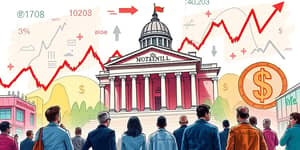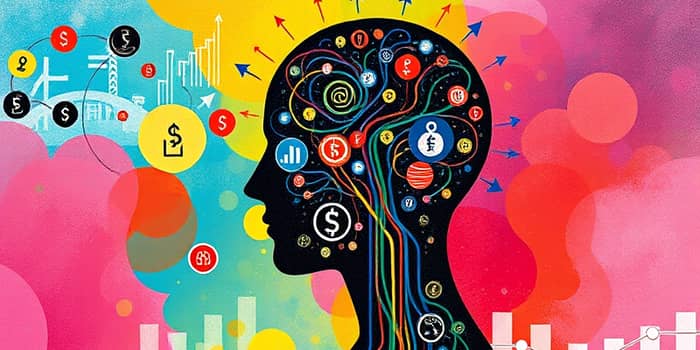
Behavioral economics offers a window into the true engine of decision-making: the human mind. By blending psychology and economics, it reveals the predictable ways in which we diverge from idealized rational models. This article explores how insights from this field can inspire better policies, smarter products, and more mindful personal choices.
- Defining behavioral economics: understanding the blend of psychology and economics.
- Historical foundations: tracing ideas from Adam Smith to Kahneman and Tversky.
- Core concepts: exploring biases like loss aversion, framing, and present bias.
- Real-world applications: demonstrating impact across sectors and everyday life.
What Is Behavioral Economics?
At its heart, behavioral economics examines how people systematically deviate from rational choices in everyday settings. Traditional economic theory models agents as perfectly rational actors with stable preferences, yet decades of research show that real humans have limited attention and cognitive capacity and often rely on mental shortcuts.
This discipline is grounded in empirical observations showing real choices that contradict the assumptions of neoclassical models. Instead of assuming optimization at every step, behavioral economics introduces nuanced models that account for heuristics, emotions, and social influences.
Leading voices like Richard Thaler emphasize that most economists study decisions, “but not human ones,” capturing the need to integrate nonconscious psychological influences into our theories. By embracing this complexity, scholars and practitioners craft more effective interventions and predictions.
Historical Roots and Evolution
The seeds of behavioral economics can be traced back to Adam Smith’s reflections on self-command and irrational passions, but it was not until the mid-20th century that the field took shape. Psychologists Daniel Kahneman and Amos Tversky conducted pioneering experiments in the 1960s and ’70s, revealing how people rely on heuristics and anchor their judgments on initial values.
Their development of prospect theory introduced core ideas like loss aversion and reference dependence, forever changing our perspective on risk and reward. Simultaneously, behavior analysts treated human actions as a finite resource, leading to concepts such as the “unit price” of behavior and demand curves for activities.
The popular breakthrough came in 2008 with Thaler and Sunstein’s Nudge, which showcased how subtle changes in choice architecture can steer behavior without restricting freedom. Since then, governments around the globe have established nudge units to improve public welfare, while corporations embed these principles to enhance customer engagement and well-being.
Key Concepts and Behavioral Biases
Behavioral economics offers a rich catalog of biases that influence our decisions:
Loss aversion and reference dependence: People feel losses more intensely than equivalent gains. Emphasizing what may be lost can be more motivating than highlighting potential gains.
Framing and anchoring effects: The way information is presented and the first numbers we see powerfully shape our choices, even if they are arbitrary.
Time inconsistency and temporal discounting: We disproportionately prefer immediate rewards over larger future benefits, explaining procrastination and under-saving.
Status quo and default biases: Individuals tend to stick with preset options, leading to high uptake when beneficial defaults are established.
Overconfidence: People often overestimate their abilities and the accuracy of their predictions, contributing to excessive risk-taking and planning errors.
Social norms and social proof: Behavior is strongly influenced by perceptions of what peers do, making descriptive norms a powerful lever for change.
Peak-end rule: Experiences are remembered by their most intense moment and their final phase, highlighting the importance of designing positive endings.
Opportunity cost neglect: We frequently overlook the benefits of alternatives when costs are not made salient, leading to suboptimal allocations of time and money.
Applications in the Real World
Behavioral insights have transformed policies, products, and personal strategies. Organizations in diverse sectors harness these principles to improve outcomes and foster well-being.
- Government and public policy
- Business and marketing
- Product and user experience design
- Financial services
- Human resources and organizational behavior
- Individual habit formation and personal finance
In public policy, default enrollment in retirement plans has skyrocketed savings rates without restricting choice. Marketers use anchoring and scarcity cues to enhance perceived value, while UX designers apply the peak-end rule to create memorable interactions. Financial advisors integrate commitment devices to help clients overcome present bias and temporal discounting, and HR teams leverage social proof to strengthen workplace cultures.
At the individual level, people set up automatic transfers to savings accounts, frame fitness goals as avoidance of loss, and enlist friends for accountability, translating theory into tangible progress.
Ongoing Debates and Future Directions
Despite its impressive track record, behavioral economics faces critical questions. Some critics argue that nudges may infringe on autonomy if implemented without transparency, raising ethical considerations around paternalism. Others point to the replication crisis in psychology, questioning the robustness of certain bias effects across contexts.
There is also a growing conversation about cultural variation: whether insights derived in Western settings hold true globally. As big data and artificial intelligence intersect with behavioral science, researchers must balance innovation with data privacy and ethical integrity.
- Ethical limits of choice architecture
- Reproducibility and scientific rigor
- Cultural and socioeconomic generalizability
- Data privacy and algorithmic transparency
Looking ahead, the field is poised to integrate machine learning to personalize interventions, explore cross-cultural applications, and deepen our understanding of collective decision-making in increasingly interconnected societies.
Conclusion: Embracing the Human Factor
Behavioral economics reminds us that our choices are shaped by hidden forces—habits, emotions, and social cues—but also that these forces can be channeled for positive impact. By recognizing the predictable systematic mistakes we make, we can design environments that promote health, wealth, and happiness.
Whether you are a policymaker crafting public programs, a designer refining user journeys, or an individual seeking self-improvement, the human factor offers a powerful lens. As we continue to refine these insights, we stand at the threshold of a more empathetic, effective approach to decision-making that honors both mind and market.
References
- https://teecluj.ro/en/courses/behavioural-economics-in-practice.html
- https://www.aeaweb.org/articles?id=10.1257%2Faer.p20151047
- https://impactually.se/behavioral-economics-in-practice/
- https://brandtrust.com/blog/behavioral-economics/
- https://study.uq.edu.au/stories/predicting-unpredictable-6-key-behavioural-economics-concepts
- https://www.thechicagoschool.edu/insight/psychology/behavioral-economics-individual-behavior/
- https://www.behavioraleconomics.com/resources/mini-encyclopedia-of-be/
- https://www.behavioraleconomics.com/be-academy/theory-and-practice/
- https://dash.harvard.edu/bitstreams/7312037d-dddd-6bd4-e053-0100007fdf3b/download
- https://news.uchicago.edu/explainer/what-is-behavioral-economics
- https://bookmap.com/blog/6-behavioral-economics-principles-every-trader-should-know
- https://www.psychologytoday.com/us/basics/behavioral-economics
- https://www.behavioraleconomics.com/be-guide/
- https://pmc.ncbi.nlm.nih.gov/articles/PMC3680155/