In a rapidly evolving world, startups have become the heartbeat of progress. With agility, vision, and passion, they are redefining industries and challenging established norms.
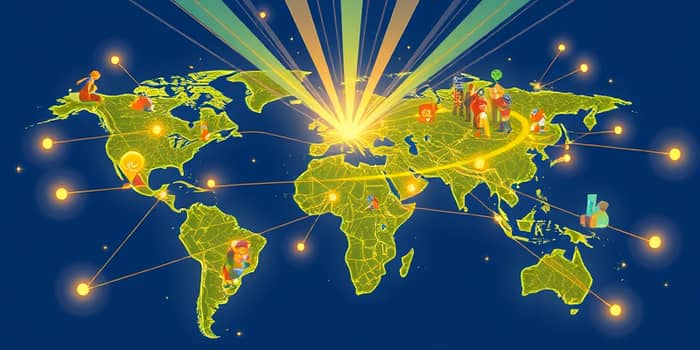
The global startup ecosystem is no longer a niche corner of the market—it stands as ecosystem as central infrastructure for economic, technological, and societal change.
The Role of Startups in Global Transformation
Startups are celebrated as key drivers of breakthrough innovation. According to the OECD, they inject dynamism into economies, fostering long-term growth through fresh ideas and nimble execution.
These young companies spearhead both the digital and green transition. From climate-tech ventures reducing carbon footprints to AI platforms automating critical tasks, founders are reshaping our collective future.
Innovation today extends beyond product features. It spans business models, workforce strategies, and cross-sector partnerships that amplify impact.
Mapping the Ecosystem: Scale and Structure
The scale of the global startup landscape is staggering. The StartupBlink Index now covers over 150,000 entities, spanning 110+ countries and 1,400+ cities.
Dealroom and Startup Genome reports further validate this growth, benchmarking hundreds of cities on investment, talent, and output. Governments rely on these insights to shape policy and attract capital.
A snapshot of unicorn distribution underscores concentration and emerging challengers:
Sector Highlights and Emerging Verticals
Sectoral funding reveals hot spots of innovation. Healthcare claimed 16.5% of VC activity in Q1 2025, while digital health startups secured $10.1 billion in 2024.
Climate-tech has enjoyed average annual VC growth of 23% since 2010, led by low-carbon technologies and resource efficiency ventures expanding rapidly.
Artificial intelligence, fintech, and deep tech continue to attract early and late-stage investors keen on breakthrough applications.
Geographic Shifts and Emerging Hubs
The United States remains the top ecosystem, but growth has slowed. Only 22% of the top 1,000 startup cities reside there, signaling mounting competition.
Asia-Pacific leads growth, with China’s national rate at 45.9% and Singapore surging by 44.9% to fourth place globally. Cities like Beijing, Shanghai, and Hangzhou are now top five leaders.
- Saudi Arabia doubled its ecosystem size with 236.8% growth, jumping 37 places.
- Baku earned “City of the Year” after a 47-spot climb.
- Europe’s London and Paris continue robust gains, each posting over 25% growth.
Per-capita intensity charts Israel at 138 startups per 10,000 residents, followed by the United States and Singapore, illustrating how small nations can lead.
Fueling Growth: Capital Flows and Funding Dynamics
Venture capital in OECD countries reached 1.2% of GDP in 2021, catalyzing innovation across stages. Yet, experts emphasize a broad mix of financial instruments—grants, incubators, government VC—to bridge early gaps.
After a boom-bust cycle, Cosmotech reports that global VC investment recovered to $368 billion in 2024, marking a 29% rebound. This resilience highlights investor confidence amid uncertainty.
- Seed Stage: Initial concept validation and prototype build.
- Early Stage: Product development and market fit refinement.
- Late Stage: Scaling operations and expanding customer reach.
- Growth Funding: Accelerating toward exit via IPO or acquisition.
Challenges and Opportunities Ahead
Despite progress, startups face hurdles: regulatory complexity, talent shortages, and market saturation in some regions. Bridging the gap between pilot projects and scalable businesses remains critical.
Governments and investors must prioritize inclusive policies that support founders from diverse backgrounds, ensuring equitable access to capital and networks.
By fostering collaboration between corporates, academia, and innovators, ecosystems can tackle grand challenges in health, climate, and digital equity.
Looking Ahead: Building Inclusive and Sustainable Futures
The ultimate promise of the global startup ecosystem lies in its ability to deliver inclusive and sustainable futures. When innovation aligns with social and environmental goals, the benefits multiply.
Startups equipped with purpose and resilience can drive durable change, from affordable healthcare solutions in underserved regions to clean energy deployments across continents.
By recognizing startups as more than businesses—as catalysts for progress—we empower communities, create jobs, and unlock new horizons of possibility.
Now is the moment for entrepreneurs, policymakers, and investors to unite behind a shared vision: a vibrant, interconnected startup landscape that leaves no region or idea behind.
References
- https://www.startupblink.com/blog/global-startup-ecosystem-trends/
- https://www.statista.com/topics/4733/startups-worldwide/
- https://dominovc.com/tech-startup-trends-in-global-startup-ecosystem/
- https://www.oecd.org/en/topics/sub-issues/start-up-driven-innovation-and-growth.html
- https://startupgenome.com
- https://dealroom.co/tech-ecosystem-index-2025/
- https://startupgenome.com/report/gser2025
- https://ff.co/startup-statistics-guide/
- https://www.startus-insights.com/innovators-guide/startup-trends/
- https://searchlab.nl/en/statistics/startup-statistics-2026
- https://cosmotech.no/reports/startup-ecosystems
- https://www.evrythink.com/guides/understanding-the-startup-landscape-2025-key-statistics-and-trends
- https://lp.startupblink.com/report/