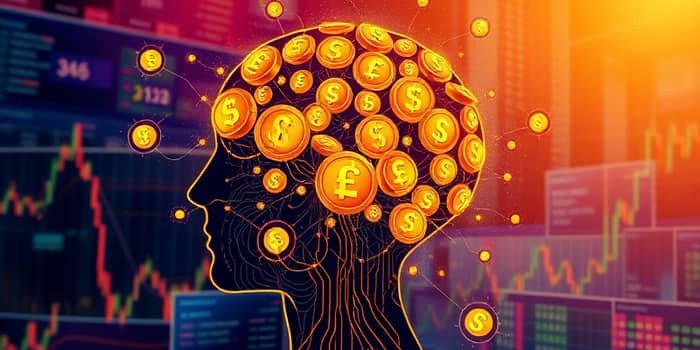
Traditional economic theory often paints a picture of people as purely rational calculators—so-called Homo economicus—weighing pros and cons in perfect balance. In reality, our choices around spending, saving, and investing are steeped in emotion, habit, and social context. Every dollar we handle carries psychological weight that can overpower any spreadsheet model.
By exploring the insights of behavioral economics and neuroeconomics, we uncover why individuals systematically deviate from rationality. From the pain of a loss to the thrill of an impulse purchase, our brains are hardwired to shape financial behavior in surprising ways.
Understanding Behavioral Economics
Behavioral economics fuses psychology with economic principles to investigate how people actually behave in financial settings, not how textbook models predict they should. It preserves the notion of optimization but acknowledges that human cognition has limits.
Key pioneers such as Amos Tversky, Daniel Kahneman, and Richard Thaler documented systematic biases—errors in judgment that recur across contexts. By integrating these findings, modern theory better reflects real markets, policy outcomes, and personal finance choices.
Loss Aversion and Prospect Theory
One of the most powerful principles is losses more intensely than gains. Prospect theory shows that the disutility of losing $100 exceeds the pleasure derived from gaining $100. This imbalance drives risk-averse behavior over potential gains and risk-seeking moves to avoid sure losses.
In everyday life, loss aversion explains why investors hold onto declining stocks, hoping to avoid crystallizing a loss. It underpins reluctance to switch service providers or insurance plans, even when better deals exist. Recognizing this bias can empower more rational financial decisions.
Time Preferences: Present Bias and Hyperbolic Discounting
Humans overweight rewards available immediately—an effect known as present bias. When offered $10 now versus $15 in a month, many choose $10 instantly, despite its lower long-term value. Hyperbolic discounting formalizes this tendency, illustrating why we often plan to save more tomorrow but spend today.
This dynamic explains under-saving for retirement, accumulating credit card debt, and difficulty adhering to budgets. By automating contributions and using commitment devices, we can outsmart our short-sighted impulses and protect our future selves.
Status Quo Bias, Defaults, and Decision Paralysis
The status quo bias causes us to stick with existing choices, avoiding change even when it is beneficial. Similarly, default options wield outsized influence: plans that require no action often see participation rates soar. Opt-out retirement saving programs are a prime example.
Too many options can also overwhelm and freeze decision-making. In complex markets—from mutual funds to mobile plans—consumers frequently delay selecting any product rather than navigate a maze of features and fees.
Framing Effects and Anchoring
How a choice is presented can dramatically alter decisions. A financial product with a “95% success rate” feels more appealing than one with a “5% failure rate,” though they are identical. This framing effect exploits our emotional responses.
Anchoring arises when the first number offered serves as a mental reference point. A high sticker price followed by a discount, or an initial salary figure in negotiations, becomes an anchor that biases subsequent judgments.
Neuroeconomics: The Brain Behind Money Decisions
Neuroeconomics dives into the neural circuitry of economic choices, employing tools like fMRI, EEG, and eye-tracking. It reveals a dual-system architecture: an emotional, dopamine-driven network in the ventral striatum that craves immediate rewards, and a deliberative prefrontal cortex that supports long-term planning.
Understanding this neural tug-of-war explains why resisting a sale or sticking to a budget can feel neurologically taxing, like swimming upstream against instinctive impulses.
Applying Psychology to Everyday Finance
From grocery shopping to portfolio management, cognitive biases and social influences permeate daily money decisions. Marketers leverage scarcity cues, anchoring prices, and social proof to nudge purchases. Social media amplifies FOMO (fear of missing out), fueling trend-driven spending sprees.
Conversely, policy designers and employers harness these insights to promote positive behaviors—automatic enrollment in retirement plans, default green energy options, and personalized feedback on spending patterns.
Strategies for Smarter Money Choices
Awareness of psychological influences is the first step toward better financial habits. Consider these practical techniques:
- Use pre-commitment devices: schedule automatic transfers and bill payments to enforce consistent saving.
- Set meaningful reference points: frame goals as milestones (e.g., emergency fund of three months’ expenses).
- Limit choices: curate a shortlist of investment or service options to avoid decision paralysis.
- Reframe losses and gains: mentally focus on long-term progress rather than short-term fluctuations.
Building self-control is like training a muscle. Regularly practicing small acts of discipline—resisting minor temptations or delaying small purchases—can strengthen willpower over time.
Conclusion: Harnessing Mind Over Money
Far from being irrational anomalies, our economic choices reflect deep-seated psychological and neurological processes. By recognizing biases such as loss aversion, present bias, and framing effects, we can design environments and habits that guide us toward more rational outcomes.
Whether you’re an individual aiming to boost retirement savings or a policymaker crafting effective financial programs, the integration of psychology into economics offers powerful tools for positive change. Ultimately, the path to financial well-being lies not just in logic, but in understanding the intricate workings of the human mind.
References
- https://www.quontic.com/resources/blog/other-money-news/mind-over-money-how-behavioral-economics-affects-your-finances/
- https://www.aeaweb.org/articles?id=10.1257%2Faer.p20151047
- https://www.psychologicalscience.org/observer/mind-over-money
- https://study.uq.edu.au/stories/predicting-unpredictable-6-key-behavioural-economics-concepts
- https://www.museodelrisparmio.it/blog/money-and-psychology-how-does-the-brain-influence-our-economic-choices/
- https://brandtrust.com/blog/behavioral-economics/
- https://www.youtube.com/watch?v=OLSfwhfWssc
- https://news.uchicago.edu/explainer/what-is-behavioral-economics
- https://www.behavioraleconomics.com/resources/mini-encyclopedia-of-be/
- https://dash.harvard.edu/bitstreams/7312037d-dddd-6bd4-e053-0100007fdf3b/download
- https://bookmap.com/blog/6-behavioral-economics-principles-every-trader-should-know