Across every continent, water is becoming a defining resource for stability, growth, and survival. In 2026 and beyond, the choices we make will determine whether communities face violent conflict or reap sustainable rewards from this vital asset.
The scale of global water scarcity
Today, approximately 2.1–2.2 billion people lack access to safely managed drinking water services. Nearly 703 million people lack basic water supplies, while over 4 billion individuals face severe scarcity for at least one month each year.
The United Nations warns that by 2025, some 1.8 billion people will live in areas experiencing absolute water scarcity. By 2030, global water demand could exceed supply by 40%, displacing an estimated 24–700 million people and placing nearly half the world’s population under high stress.
From crisis response to water bankruptcy management
The concept of era of global water bankruptcy captures the dire state of overdrawn basins and depleted aquifers. More than 50% of the world’s large lakes have shrunk since the early 1990s, directly affecting 25% of humanity dependent on those waters.
Wetlands, once nature’s kidneys, are vanishing at an alarming rate: about 35% lost since 1970. Droughts now cost the global economy roughly $307 billion each year in damages, underscoring the urgent need for strategies based on hydrological reality rather than outdated norms.
Driving forces behind water stress
Water scarcity is not a standalone phenomenon; it arises from converging social, economic, and environmental pressures. Key drivers include:
- Population growth and urbanization surge tripling demand over 70 years and concentrating needs in cities.
- Agricultural dominance of freshwater withdrawals at nearly 70%, with inefficient irrigation depleting groundwater reservoirs.
- Climate change increasing hydrological volatility, altering rainfall, accelerating glacial melt, and intensifying droughts and floods.
- Pollution and ecosystem degradation from industrial, agricultural, and plastic waste, cutting usable water and raising treatment costs.
- Weak governance and social inequity, where underinvestment and corruption compound scarcity for vulnerable populations.
Hotspots and the specter of water wars
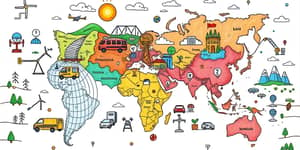
Certain regions stand on the frontlines of scarcity. In the Middle East and North Africa, countries like Kuwait and Qatar rank among the highest stress levels globally. Sub-Saharan Africa expects 25 nations to experience worsening scarcity by 2025, with only 22–34% of some populations accessing safe supplies.
South and East Asia grapple with declining aquifers under densely populated basins like the Indus, Ganges-Brahmaputra, and Mekong. Latin America, despite overall water abundance, faces local shortages from Andean glacier retreat and polluted rivers.
Transboundary tensions further fuel conflict risk. Roughly two-thirds of freshwater crosses national borders, yet formal sharing frameworks are scarce. While large-scale “water wars” remain rare, localized violence, protests, and displacement tied to shortages are on the rise, illustrating water’s role as a threat multiplier in fragile settings.
Unveiling water’s hidden economic value
Water is more than a resource; it underpins economies. The World Economic Forum estimates the total use value of freshwater at $58 trillion, or 60% of global GDP. Indirect benefits—natural filtration, flood mitigation, carbon sequestration—are valued at seven times direct uses like drinking and irrigation.
Yet, despite its immense value, water is often treated as if almost free. Chronic underinvestment and fragmented financing leave infrastructure aging and ecosystems degraded, creating invisible risk and unrealized potential.
The costs of inaction are staggering. Beyond $307 billion in drought damages, health crises from unsafe water burden healthcare systems, time lost collecting water constrains education and productivity, and food security falters when irrigation systems fail.
Investing in water solutions: pathways to resilience
Transitioning from scarcity to resilience requires deploying capital across diverse strategies, from traditional infrastructure to innovative markets:
- Advanced water technologies: sensors for optimized irrigation, desalination paired with renewable energy, and AI-driven leak detection.
- Nature-based infrastructure: wetland restoration, watershed protection, and green stormwater systems that absorb runoff and recharge aquifers.
- Policy and market reforms: implementing water pricing mechanisms, water rights trading platforms, and public-private partnerships to improve efficiency.
- Impact investing and blended finance: directing philanthropic capital and concessional loans toward community-led water projects and scalable social enterprises.
Concrete examples demonstrate success: a solar-powered desalination facility in Morocco supplying 100,000 residents, a public-private partnership in Chile reducing irrigation losses by 30%, and an impact fund in India financing 200 water purification startups.
Charting a course toward water wealth
The contrast between “water wars” and “water wealth” is stark. Where tensions erupt from scarcity and inequity, opportunities flourish in regions that value, price, and invest in water as an essential asset. Shifting the narrative from conflict to cooperation, from bankruptcy to sustainable management, demands collective action.
Governments, investors, and communities must embrace a mindset of holistic water stewardship for future generations. By aligning financial incentives with environmental realities, fostering transparent governance, and scaling proven technologies, we can unlock the full spectrum of water’s potential.
The decisions made today will echo for decades: either exacerbating conflict and risk or forging a legacy of resilience, shared prosperity, and enduring “water wealth.”
References
- https://www.weforum.org/stories/2025/10/what-is-water-worth-financing-innovation-resilience/
- https://seametrics.com/future-water/
- https://earth.org/global-water-crisis-why-the-world-urgently-needs-water-wise-solutions/
- https://www.circleofblue.org/newsletter/the-stream-january-13-2026-water-scarcity-among-major-global-political-risks-for-2026-report-warns/
- https://www.oxydus.com/blog/investing-in-water-not-just-for-the-wealthy-but-for-the-wisenbsp
- https://news.un.org/en/story/2026/01/1166800
- https://worldpopulationreview.com/country-rankings/water-stress-by-country
- https://www.nature.org/en-us/what-we-do/our-insights/perspectives/investing-our-way-out-of-the-global-water-crisis/
- https://www.unesco.org/en/articles/united-nations-world-water-development-report-2026
- https://www.wri.org/freshwater
- https://www.unwater.org/publications/un-world-water-development-report-2026
- https://www.youtube.com/watch?v=0qSLSBMt8Tc
- https://unu.edu/inweh/news/world-enters-era-of-global-water-bankruptcy
- https://www.cfr.org/backgrounders/water-stress-global-problem-thats-getting-worse